🇹🇷 Türkçe | Kıyı Gecelerinin Müziğiyle Serinleyen Şehirde Tatilin Uzun Yankısı
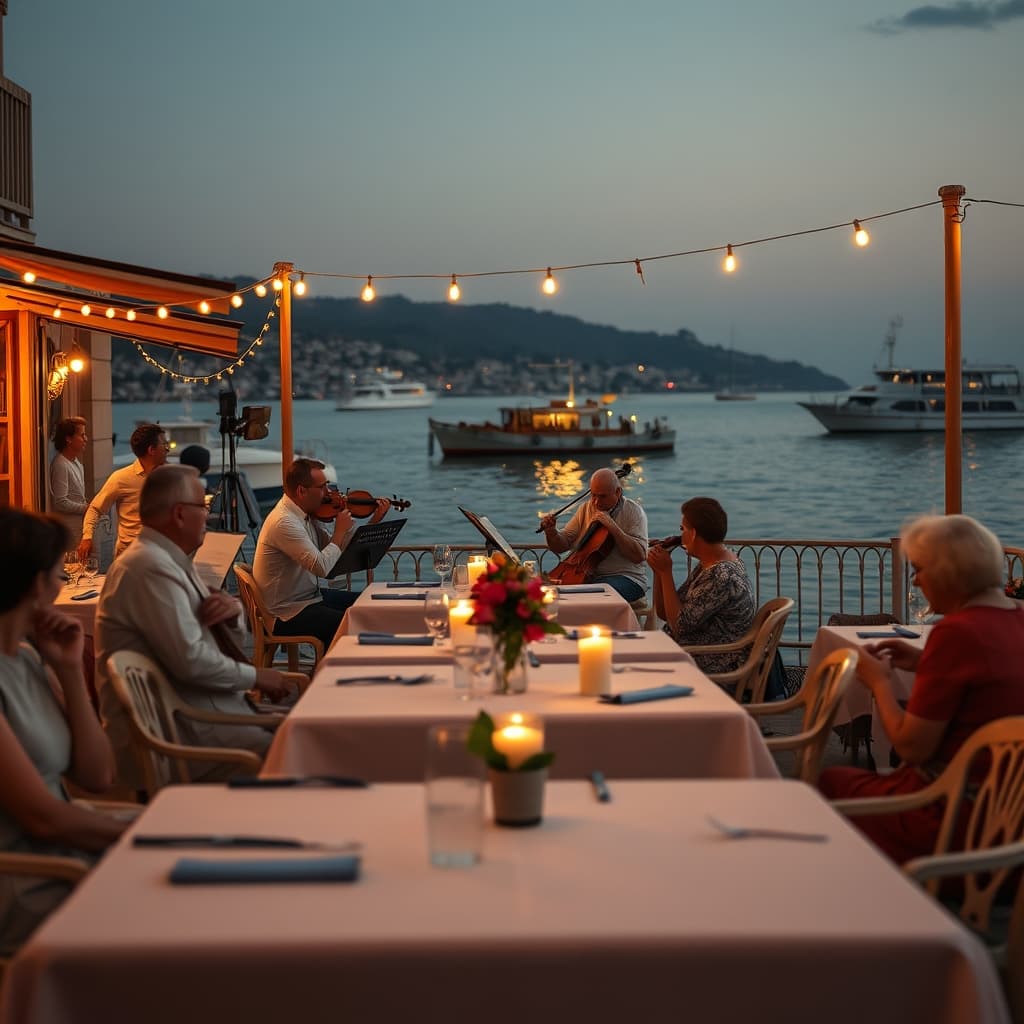
Yazın ağır ağır yerleştiği kıyı kentlerinde gece, karanlığın çökmesiyle değil müziğin başlamasıyla tamamlanırdı. Denizden gelen hafif iyot kokusu, kaldırım taşlarında biriken gün sıcaklığı ve uzak masalardan yükselen bardak sesleri arasında yaz orkestrasının ilk notaları duyulduğunda, şehir sanki gündüzden daha canlı bir hâle geçerdi. O an yalnız eğlence başlamazdı; tatil duygusu, sıradan akşamın üzerine ince ama ısrarlı bir ışık gibi yayılırdı. Bir kuşağın belleğinde o geceleri unutulmaz kılan şey tam da buydu: hayat birkaç saatliğine daha hafif, daha parlak ve daha mümkün görünürdü.
Zamanın İzinde bakıldığında kıyıda çalınan yaz orkestraları yalnız bir sahne programı değildi. Onlar, şehir yaşamının mevsimle kurduğu ilişkinin işitilebilir hâliydi. Yazlık sinemaların, kıyı çay bahçelerinin, otel teraslarının ve iskele kenarındaki açık hava salonlarının ortak bir sesi vardı. Keman, akordeon, saksafon ya da ritim davulu bazen profesyonel bir zarafetle, bazen de hafif amatör bir içtenlikle akşamı örerdi. İnsanlar bu müziği dinlemeye giderken biraz da kendilerini başka bir hayata yaklaşmış hissederdi; daha şık giyinilir, çocukların saçı taranır, sandalye seçimi bile küçük bir tören ciddiyeti taşırdı.
Bu gecelerin şehir belleğinde derin iz açmasının bir nedeni, kamusal alanı duygusal bir sahneye dönüştürmesiydi. Kıyı boyunca yürüyen aileler, el ele dolaşan gençler, masasında gazoz ya da limonata duran çocuklar ve serinliğe karşı omzuna ince bir hırka alan anneler aynı melodinin içinde buluşurdu. Müzik, birbirini tanımayan insanlar arasında bile geçici bir yakınlık üretirdi. Bir şarkı başladığında kimi masada mırıldanılır, kimi yerde ayak ucu ritim tutar, kimi zaman deniz tarafından esen rüzgâr notaları koparıp başka sokağa taşırdı. Böylece şehir yalnız duyulan değil, paylaşılan bir atmosfere dönüşürdü.
Cam açtıran sabahların bu hikâyedeki yeri de tam burada belirir. Yaz orkestralarının çaldığı gecelerden sonra sabah, yalnız yeni bir gün olarak gelmezdi; geceyi taşıyan bir ferahlıkla açılırdı. Perdeler aralanır, içeri tuzlu hava girer, sokakta erken geçen simitçinin sesiyle birlikte bir önceki akşamdan kalma melodi zihinde yeniden belirirdi. İnsan bazen nedenini tam bilmeden pencereyi biraz daha çok açmak isterdi. Çünkü şehir, gece boyunca müzikle yumuşamış olurdu. O sabahların serinliği sadece hava değil, topluca yaşanmış bir yaz halinin evlere sızmasıydı.
Gündelik hayat ayrıntıları da bu belleği güçlendirirdi. Çocuklar bir gece önce sahilde dinledikleri parçayı ertesi gün sokakta ıslıkla sürdürür, otel önlerinde çalışan garsonlar hangi orkestranın daha iyi olduğunu tartışır, aileler “dün akşamki tango” ya da “o son hareketli parça” diye konuşurdu. Kıyı kasabalarının ve şehir içi sayfiye bölgelerinin küçük esnafı bile bu ritme dahildi; dondurmacı geç saate kadar açık kalır, fotoğrafçı vitrinine akşam çekilmiş parlak kıyı kareleri koyar, terziler yazlık elbiselerin teslimini bu gecelere göre ayarlardı. Tatil ruhu böylece sadece sahnede değil, şehrin tamamında dolaşırdı.
Bir başka önemli nokta, bu orkestraların dönemin sosyal görgüsünü de taşımasıydı. İnsanlar nasıl oturulacağını, nasıl dinleneceğini, hangi parçanın alkışlanacağını, dans için ne zaman cesaret edileceğini o açık hava akşamlarında öğrenirdi. Yaz gecesi, şehrin daha yumuşak bir terbiyesi gibiydi. Resmiyetle samimiyet arasında kurulan bu denge, bir kuşağın hafızasında nezaket, serinlik ve sevinç duygularını aynı çerçevede topladı. Bugün hatırlanan yalnız melodiler değildir; masa örtülerinin hafifçe uçuşması, çakıl taşlarında yürürken çıkan ses ve uzakta sallanan tekne ışıkları da o müziğin ayrılmaz parçasıdır.
Sonuçta kıyıda çalınan yaz orkestralarının tatil ruhunu büyüttüğü geceler, şehir belleğinde yalnız eğlenceli bir mevsim hatırası olarak kalmadı. O geceler, kamusal hayatın nasıl şiirleşebildiğini, müziğin bir şehri nasıl daha açık, daha serin ve daha yakın hissettirebildiğini gösterdi. Cam açtıran sabahlar da bu yüzden unutulmadı; çünkü onlar, bir önceki akşamın neşesini eve taşıyan sessiz devam sahneleriydi. Şehir hafızasında derin iz bırakan şey, müziğin bitmesine rağmen atmosferin sürmesiydi.
🇬🇧 English | The Long Echo of Holiday Evenings in a City Cooled by Music from the Shore
In coastal cities where summer settled in slowly, night did not feel complete when darkness fell, but when the music began. Between the light iodine scent from the sea, the warmth stored in the paving stones, and the clink of glasses from distant tables, the first notes of the summer orchestra made the city seem more alive than it had been in daylight. At that moment, entertainment did not merely start. A holiday feeling spread over an ordinary evening like a thin but persistent light. That is what made those nights unforgettable in the memory of a generation: for a few hours, life appeared lighter, brighter, and more possible.
Seen in historical terms, the summer orchestras playing by the shore were never just stage programs. They were the audible form of the relationship a city built with the season. Open-air cinemas, seaside tea gardens, hotel terraces, and lounges near the pier all shared a common sound. Violin, accordion, saxophone, or light percussion wove the evening together, sometimes with polished professionalism and sometimes with endearing amateur sincerity. People went to hear this music partly because it allowed them to feel closer to another kind of life. They dressed a little better, combed the children’s hair more carefully, and even the choice of chair carried the seriousness of a small ritual.
One reason those nights left such a deep mark on urban memory was that they turned public space into an emotional stage. Families walking along the shore, young couples strolling hand in hand, children with lemonade or soda on the table, and mothers taking a thin cardigan onto their shoulders against the breeze all gathered inside the same melody. The music produced a temporary intimacy even among people who did not know one another. When a familiar song began, one table hummed softly, another tapped the rhythm with a foot, and sometimes the sea wind carried the notes into another street altogether. In that way, the city became not only something heard, but an atmosphere shared.
This is also where those mornings that made people open the windows find their place in the story. After nights shaped by summer orchestras, morning did not arrive as merely another day. It opened with a freshness that still carried the night. Curtains were parted, salty air entered the room, and with the cry of the early simit seller a melody from the previous evening returned to the mind. One wanted to open the window a little wider without fully knowing why. The city had been softened by music during the night, and the coolness of the morning was more than weather. It was a collectively lived summer mood entering the home.
Everyday details strengthened this memory even further. Children continued a tune they had heard on the shore by whistling it in the street the next day. Waiters working in front of hotels argued over which orchestra had played better. Families spoke of “last night’s tango” or “that final lively piece.” Even the small trades of coastal towns and urban summer quarters moved with the same rhythm. Ice cream sellers stayed open later, photographers placed bright evening seaside prints in their windows, and tailors timed the delivery of summer dresses to these nights. The holiday spirit thus circulated not only on the stage, but through the whole city.
Another important point is that these orchestras also carried the social etiquette of their period. In those open-air evenings, people learned how to sit, how to listen, which piece called for applause, and when to gather the courage to dance. A summer night worked like the city’s gentler schooling. The balance between formality and warmth brought elegance, coolness, and joy together in the memory of a generation. What is remembered today is not only the melodies. The slight movement of tablecloths, the sound of footsteps on pebbles, and the distant lights of rocking boats all belong to that music as well.
In the end, the nights when summer orchestras by the shore expanded the holiday spirit did not remain in urban memory as a simple seasonal entertainment. They showed how public life could turn lyrical, and how music could make a city feel more open, cooler, and closer. That is why the mornings that made people open the windows were not forgotten. They were the quiet continuation scenes that carried the joy of the previous evening into the house. What left the deepest mark was that the atmosphere endured even after the music had ended.
🇧🇷 Português (Brasil) | O Eco Longo das Noites de Férias numa Cidade Refrescada pela Música da Beira-Mar
Nas cidades litorâneas onde o verão se instalava devagar, a noite não parecia completa quando escurecia, mas quando a música começava. Entre o leve cheiro de maresia, o calor guardado nas pedras da calçada e o som dos copos vindo das mesas mais distantes, as primeiras notas da orquestra de verão faziam a cidade parecer mais viva do que durante o dia. Naquele instante, não começava apenas um divertimento. Um espírito de férias se espalhava sobre a noite comum como uma luz fina, porém insistente. É isso que tornou aquelas noites inesquecíveis para uma geração: por algumas horas, a vida parecia mais leve, mais luminosa e mais possível.
Quando vista no tempo, a orquestra tocando à beira-mar nunca foi apenas um programa de palco. Ela era a forma audível da relação entre a cidade e a estação. Cinemas ao ar livre, cafés da orla, terraços de hotéis e salões próximos ao cais compartilhavam um mesmo fundo sonoro. Violino, acordeão, saxofone ou percussão suave costuravam a noite, às vezes com elegância profissional, às vezes com uma sinceridade quase amadora e muito humana. As pessoas iam ouvir essa música porque, de certo modo, ela as fazia se sentir mais próximas de outra vida. Vestiam-se um pouco melhor, penteavam com mais cuidado o cabelo das crianças, e até a escolha da cadeira trazia a seriedade de um pequeno ritual.
Uma razão para essas noites terem deixado marca tão profunda na memória urbana é que elas transformavam o espaço público num palco afetivo. Famílias caminhando pela beira-mar, jovens de mãos dadas, crianças com gasosa ou limonada na mesa e mães puxando um casaquinho fino por causa da brisa se encontravam dentro da mesma melodia. A música criava proximidade passageira até entre desconhecidos. Quando uma canção conhecida começava, uma mesa cantarolava baixinho, outra marcava o ritmo com a ponta do pé, e às vezes o vento do mar carregava as notas para outra rua. Assim, a cidade virava não apenas algo que se ouvia, mas uma atmosfera compartilhada.
É nesse ponto que entram as manhãs que faziam abrir as janelas. Depois de noites embaladas por orquestras de verão, a manhã não chegava apenas como mais um dia. Ela se abria com um frescor que ainda guardava a noite. As cortinas eram afastadas, o ar salgado entrava em casa, e com o chamado do vendedor de simit uma melodia da véspera voltava à memória. A pessoa queria abrir a janela um pouco mais sem saber exatamente por quê. A cidade tinha sido amaciada pela música durante a noite, e o frescor da manhã era mais do que clima. Era um estado de verão vivido em conjunto entrando em casa.
Os detalhes do cotidiano reforçavam ainda mais essa lembrança. As crianças continuavam no dia seguinte, assobiando na rua, uma música ouvida na praia. Garçons de hotéis discutiam qual orquestra tinha tocado melhor. As famílias comentavam “o tango de ontem” ou “aquela última música mais animada”. Até os pequenos comércios das cidades de praia e dos bairros de veraneio seguiam esse compasso. O sorveteiro ficava aberto até mais tarde, o fotógrafo colocava na vitrine imagens luminosas da orla à noite, e os alfaiates organizavam a entrega das roupas de verão pensando nessas ocasiões. O espírito de férias circulava, assim, não só no palco, mas pela cidade inteira.
Outro ponto importante é que essas orquestras também carregavam a etiqueta social de seu tempo. Nessas noites ao ar livre, as pessoas aprendiam como sentar, como ouvir, qual música merecia aplauso e em que momento reunir coragem para dançar. A noite de verão funcionava como uma educação mais suave da cidade. O equilíbrio entre formalidade e proximidade reuniu elegância, frescor e alegria na memória de uma geração. O que se recorda hoje não são apenas as melodias. O leve movimento das toalhas de mesa, o som dos passos sobre as pedrinhas e as luzes dos barcos balançando ao longe também pertencem a essa música.
No fim, as noites em que orquestras de verão tocavam à beira-mar e ampliavam o espírito das férias não ficaram na memória urbana apenas como uma diversão de estação. Elas mostraram como a vida pública podia se tornar poética e como a música podia fazer uma cidade parecer mais aberta, mais fresca e mais próxima. É por isso que as manhãs que faziam abrir as janelas não foram esquecidas. Elas eram a continuação silenciosa da alegria da noite anterior dentro de casa. A marca mais funda ficou porque a atmosfera persistia mesmo depois de a música terminar.