Eski Pano
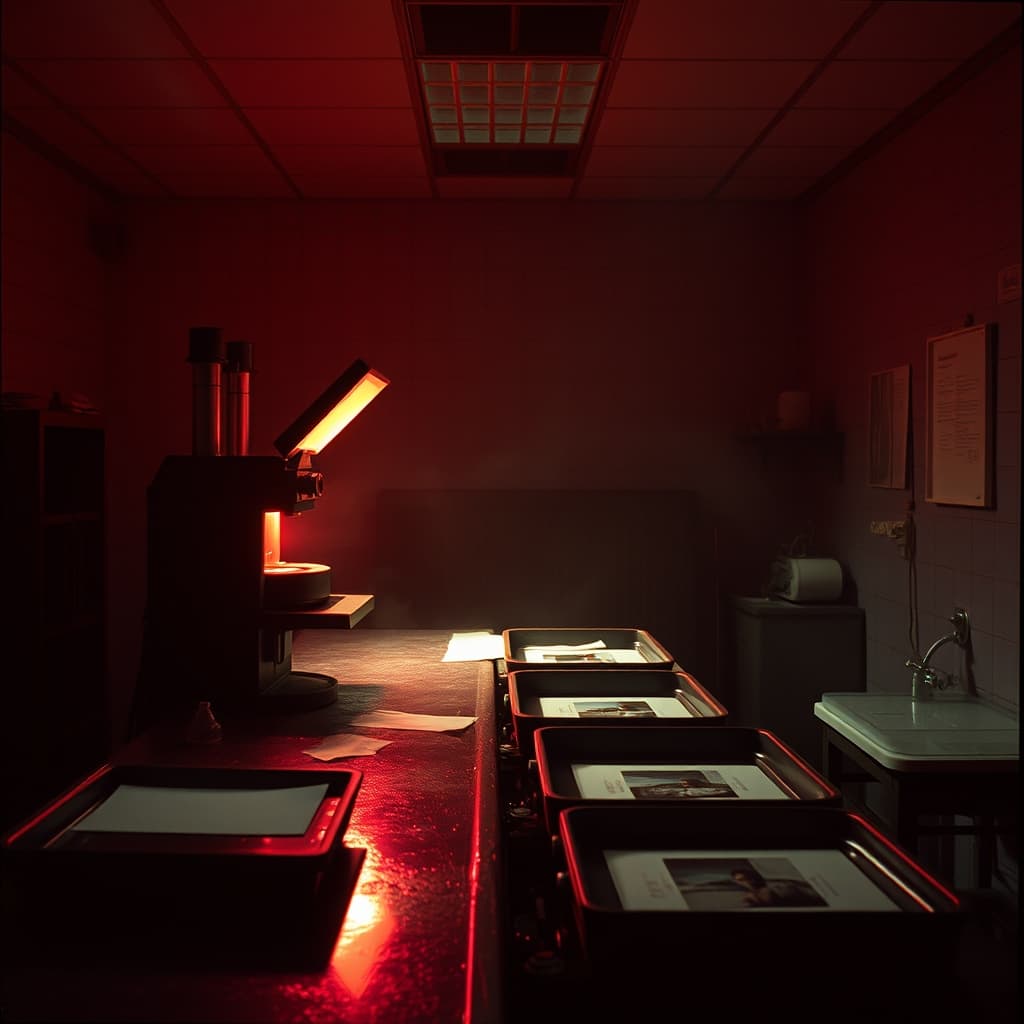
Some rooms are more than rooms; they are small time capsules that preserve the spirit of an era. Darkrooms set up in back sections of old homes or behind curtains in neighborhood photo studios were exactly that. While outside someone turned a rooftop antenna to clear the evening TV image, while voices called out from window to roof in search of less static, another kind of clarity emerged inside. Under red safelight, photographic paper entered the chemical tray, and on the liquid surface a blur became a shadow, then a face, then a story. The moment felt less like a cold technical operation and more like a patient ritual.
The darkroom enlarger was a special instrument that united engineering precision with emotional rhythm. The negative was fixed into its carrier, the focus ring turned in tiny increments, the height column adjusted carefully, and the timer watched almost without breathing. A few extra seconds of exposure could ruin everything; a few missing seconds could erase the most meaningful detail. For that reason, the person at the enlarger needed more than technical knowledge; they needed inner discipline and measured calm. What today can be generated in seconds with a filter once depended on chemical smells, wet counters, and hand movements trained like clockwork.
The social side of this practice was as powerful as the technical side. In small studios printing wedding photos, people waited with quiet excitement, asking if prints would be ready tomorrow and imagining which frame would live in the family album. In homes where amateurs built makeshift darkrooms, children witnessed for the first time the magic of an image appearing from almost nothing. Smiles rose softly when a family portrait surfaced under red light. Photography, then, was not merely a final product that stored memory; it was a shared process that produced trust through waiting. Looking at a print meant remembering not only the captured day, but the labor that brought that image to paper.
That is why the phrase “hope sharpening with every antenna turn” carries weight. People of that period felt the same emotional movement both in front of television sets and inside darkrooms: from uncertainty toward clarity, from static toward form, from waiting toward reward. Using a darkroom enlarger became a ritual in itself because it shaped not only images, but one’s relationship with time. There was no shortcut, no instant fix, only care, repetition, and craft. Even if the ritual now seems distant, it remains alive in cultural memory. Some technologies do more than perform a function; they teach a generation how to look, how to wait, and how to understand value through delay.
Another lesson of that ritual was learning to live with imperfection and try again. Prints could burn, contrast could fail, and a promising frame could disappear because of a small chemical mistake. Yet the process was rebuilt from the beginning, because in analog practice quality was found through repetition, not instant correction. The darkroom therefore produced more than photographs. It trained concentration, humility, and loyalty to craft. What memory keeps today is not only the resulting images, but the character formed while those images were patiently made.
Why Using a Darkroom Enlarger Alongside Hope Sharpening with Every Antenna Turn Was a Ritual in Itself