🇹🇷 Türkçe | İskele Meydanında Kendiliğinden Kurulan Buluşmaların İnce Hüzünlü Hafızası
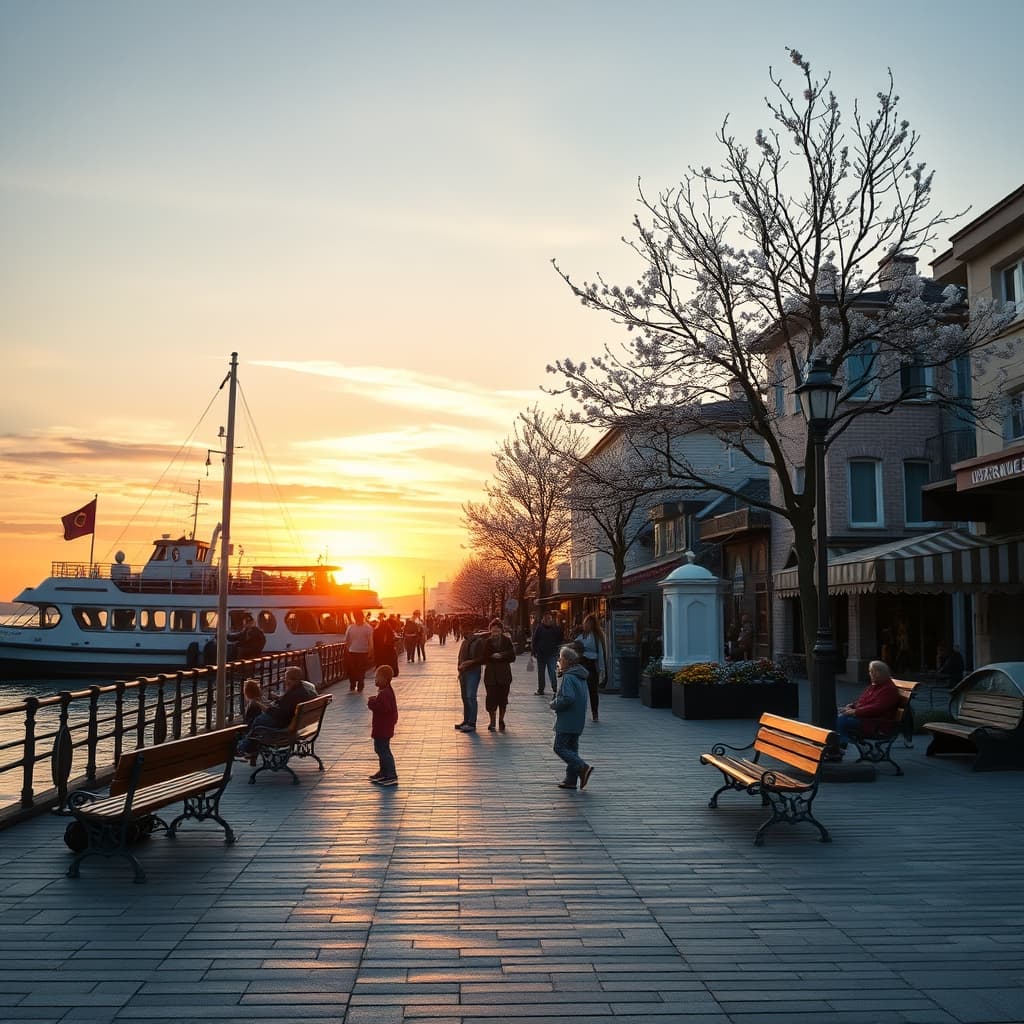
Bazı dönemler geride kaldıktan sonra tarihten çok his olarak yaşamaya devam eder. İskele meydanlarında buluşmanın sözsüz bir anlaşmaya dönüştüğü devir de böyledir. Saat konuşulmadan, uzun uzun haberleşilmeden, yalnız alışılmış bir vakitte aynı meydana varılır; biri bankın yanında bekler, biri vapurdan iner, biri denize karşı dönüp etrafı süzerdi. Bu sahnenin eski mahalle takviminden hiç düşmemiş gibi hatırlanmasının nedeni, gündelik hayatın içine yerleşmiş o sessiz güven duygusudur. İnsanlar birbirlerini tam nerede bulacaklarını, hangi ışıkta tanıyacaklarını, hangi akşamüstü rüzgârında biraz daha oyalanacaklarını bilirdi. O bilgiyi resmileştiren bir cümle yoktu; ama herkes o düzenin içindeydi.
Zamanın İzinde bakıldığında iskele meydanı yalnız bir ulaşım noktası değildi. O, semtin ritmini kuran eşiklerden biriydi. Vapur saatleri, çay bahçesindeki sandalyelerin yönü, bilet kulübesinin önündeki kısa sıra, simitçinin seslenişi ve kıyıya vurup geri çekilen suyun küçük uğultusu, meydana gelenleri günlük hayatın merkezine yerleştirirdi. Mahalle hayatında haberin büyük kısmı buralardan geçerdi. Kimin yazlıktan döndüğü, hangi akrabanın misafir geldiği, kimin oğlunun askere gittiği ya da kimin nişan hazırlığında olduğu çoğu zaman iskele çevresindeki karşılaşmalarda öğrenilirdi. Meydan, kelimenin tam anlamıyla sosyal dolaşımın açık havadaki odasıydı.
Bu buluşmaları bugün bile sızı gibi hatırlatan şey, onların gösterişsiz ama yoğun oluşudur. Birbirini bekleyen insanların yüzünde telaş değil, alışkanlıkla karışık bir sakinlik olurdu. Çocuklar korkuluğa yaslanıp martılara bakar, gençler birini uzaktan seçebilmek için gözlerini kıstığında yüzlerine hafif bir heyecan yerleşir, büyükler ise gelmesi beklenen kişiyi neredeyse saati görmeden hissederdi. Araya ıhlamur kokusuna dönen bahçeler de girerdi; çünkü iskeleden eve çıkan sokaklar boyunca baharın belli günlerinde açan ağaçlar, meydandaki tuzlu havayı ev içi bir yumuşaklıkla tamamlar, dönüş yolunu adeta hatıranın ikinci perdesine çevirirdi. Bir buluşma yalnız meydanda başlamaz, o kokulu sokaklarda eve kadar uzardı.
Gündelik hayat ayrıntıları bu hafızayı derinleştirir. Meydanda elde katlanmış gazete taşıyan amcalar, saçını aceleyle toplamış genç kadınlar, okul çantasıyla vapurdan inen çocuklar, fayton ya da dolmuş saatine yetişmeye çalışanlar aynı alanı paylaşırdı. Bazen biri geç kalır, diğeri bunun büyütülecek bir mesele olmadığını bilirdi; çünkü meydanın kendisi beklemeyi de doğal kılardı. Çay bardaklarının ince sesi, kıyıdaki paslı halkalara bağlanan küçük tekneler ve akşamüstüne doğru serinleyen hava, bu sahneye tiyatro dekoru gibi eşlik ederdi. İnsanlar orada yalnız randevulaşmaz, gündelik hayatın birbirine görünür olduğu bir ortak vakte katılırdı.
Tarihsel olarak bu tür meydanların kıymeti, modern haberleşmenin hızından önce güveni mekân üzerinden kurmalarında yatıyordu. Telefon her evde yokken ya da arama kısa ve ölçülü tutulurken, mahalle hayatı kendini böyle sabit noktalarda örgütlüyordu. İskele meydanı bu yüzden hem pratik hem duygusal bir merkezdi. Orada söylenmeden bilinen şey, yalnız buluşma saati değil; karşı tarafın geleceğine dair inançtı. Bu küçük inanç, komşuluğun ve semt kültürünün görünmez omurgalarından birini oluşturdu. Şimdi geriye dönüp bakıldığında özlenen yalnız vapurlar ya da meydan taşları değildir; insanın bir yere vardığında tanıdık birini bulacağına dair o eskimez hissidir.
Sonuçta iskele meydanlarında buluşmanın sözsüz anlaşmaya dönüştüğü devir, bugün ıhlamur kokusuna dönen bahçelerle birlikte anılıyorsa bunun nedeni, o dönemin şehir hayatında güvenin ve aidiyetin kokulu, sesli, somut bir sahneye dönüşmesidir. Meydan, yalnız karşılaşma yeri değil; birlikte yaşamanın kolay anlaşılan diliydi. Hatırlanan şey bu yüzden büyük olaylar değil, vapurdan inen ayak sesleriyle bahçelerden gelen çiçek kokusunun aynı akşamda birleşmesidir. Bir sızı olarak kalmasının nedeni de tam budur: hayatın en sıradan anları bile o günlerde daha bağlı, daha beklenen ve daha müşterek görünürdü.
🇬🇧 English | The Delicate, Slightly Melancholic Memory of Meetings that Formed on Their Own in the Pier Square
Some eras continue to live on less as history than as feeling. The time when meeting in pier squares became an unspoken agreement belongs to that category. No hour needed to be repeated at length, no messages had to circulate endlessly. At a familiar time, people simply arrived at the same square. One waited near the bench, another stepped off the ferry, another turned toward the sea and scanned the crowd. What keeps this scene alive as though it never disappeared from the neighborhood calendar is the quiet sense of trust embedded in daily life. People knew where they would find one another, in what light they would recognize a familiar face, and during which late afternoon breeze they might linger a little longer. No formal sentence established that order, yet everyone moved inside it.
Seen historically, the pier square was never only a transport point. It was one of the thresholds that set the rhythm of the district. Ferry schedules, the direction of chairs in the tea garden, the short line in front of the ticket booth, the voice of the simit seller, and the small murmur of water touching the shore all placed what happened there at the center of everyday life. Much of neighborhood news passed through such places. Who had returned from summer lodgings, whose relatives had arrived, whose son was leaving for military service, or who was preparing an engagement often became known in the encounters around the pier. The square was, in the fullest sense, an open-air room of social circulation.
What makes those meetings still ache in memory is their modest intensity. The faces of waiting people held not anxiety, but a calm shaped by habit. Children leaned against the railings and watched the gulls. Young people narrowed their eyes to recognize someone in the distance, and a light excitement settled on their faces. Older people seemed able to sense the arrival of the expected person even before checking the hour. The gardens that turned to the scent of linden also belonged to this memory, because the streets rising from the pier toward home softened the salty air with a domestic fragrance in certain weeks of spring. A meeting did not begin and end in the square alone. It continued through those scented streets on the way back.
Everyday details deepen this memory. Men carrying folded newspapers, young women who had gathered their hair in haste, children stepping off the ferry with schoolbags, and people trying to catch a carriage or dolmus shared the same space. Sometimes someone arrived late, and the other person knew it was not a matter to dramatize, because the square itself made waiting feel natural. The sound of tea glasses, the little boats tied to rusted rings by the shore, and the air turning cooler toward evening all accompanied the scene like stage decor. People did not only keep appointments there. They joined a shared hour in which daily life became visible to one another.
Historically, the value of such squares lay in the way they organized trust through place before communication became fast and constant. When telephones were absent from many homes, or when calls were brief and carefully measured, neighborhood life arranged itself around fixed points like these. That is why the pier square was both practical and emotional. What was silently known there was not only the hour of meeting, but confidence that the other person would come. That small confidence formed one of the invisible backbones of district life and neighborly culture. What people miss today is therefore not only the ferries or the paving stones, but the durable feeling that reaching a place meant finding someone familiar there.
In the end, the era when meeting in pier squares became an unspoken agreement is remembered together with gardens turning to the scent of linden because it transformed trust and belonging into a scene with smell, sound, and texture. The square was not only a meeting place. It was an easily understood language of living together. What remains in memory is not some grand event, but the way footsteps descending from the ferry and the fragrance of flowering gardens could belong to the same evening. That is why it survives like an ache: even the most ordinary moments of life then seemed more connected, more expected, and more shared.
🇧🇷 Português (Brasil) | A Memória Delicada e Levemente Melancólica dos Encontros que se Formavam Sozinhos na Praça do Cais
Algumas épocas continuam vivas menos como história e mais como sensação. O tempo em que se encontrar nas praças do cais virou um acordo sem palavras é uma delas. Não era preciso repetir o horário muitas vezes nem trocar recados sem fim. Num momento já conhecido, as pessoas simplesmente chegavam à mesma praça. Uma esperava perto do banco, outra descia da barca, outra virava para o mar e procurava um rosto familiar. O que faz essa cena parecer algo que nunca saiu do calendário do bairro é a confiança silenciosa entranhada na vida cotidiana. Sabia-se onde encontrar o outro, sob que luz reconhecê-lo e em qual brisa de fim de tarde se poderia ficar um pouco mais. Nenhuma frase oficial criava essa ordem, mas todos viviam dentro dela.
Vista no tempo, a praça do cais nunca foi só um ponto de transporte. Era um dos limiares que marcavam o ritmo do bairro. Os horários das barcas, a posição das cadeiras do café, a pequena fila diante da bilheteria, o chamado do vendedor de simit e o murmúrio da água tocando a beira colocavam aquele espaço no centro do cotidiano. Grande parte das notícias do bairro passava por ali. Quem tinha voltado da casa de veraneio, que parentes haviam chegado, de quem era o filho que ia para o serviço militar ou quem preparava um noivado eram assuntos que se sabiam nos encontros ao redor do cais. A praça era, em sentido pleno, uma sala ao ar livre da circulação social.
O que ainda faz esses encontros doerem suavemente na memória é a intensidade discreta deles. No rosto de quem esperava não havia aflição, mas uma calma feita de costume. As crianças se apoiavam na grade e olhavam as gaivotas. Os jovens semicerravam os olhos para identificar alguém ao longe, e uma excitação leve se instalava em seus rostos. Os mais velhos pareciam perceber a chegada da pessoa esperada quase sem olhar o relógio. Também faziam parte dessa lembrança os jardins que ganhavam cheiro de tília, porque as ruas que subiam do cais até as casas completavam o ar salgado com uma suavidade doméstica em certas semanas da primavera. O encontro não ficava só na praça. Continuava no caminho perfumado de volta.
Os detalhes do dia a dia aprofundam essa memória. Senhores com jornais dobrados na mão, moças que prenderam o cabelo às pressas, crianças descendo da barca com a mochila da escola e pessoas correndo para alcançar a condução dividiam o mesmo espaço. Às vezes alguém se atrasava, e o outro sabia que isso não era caso de dramatizar, porque a própria praça tornava natural o ato de esperar. O tilintar dos copos de chá, os barquinhos amarrados aos aros enferrujados da margem e o ar ficando mais fresco no fim da tarde acompanhavam a cena como um cenário. Ali as pessoas não apenas marcavam encontro. Entravam numa hora compartilhada em que a vida cotidiana se tornava visível umas às outras.
Historicamente, o valor dessas praças estava no modo como organizavam a confiança por meio do lugar antes que a comunicação se tornasse rápida e permanente. Quando o telefone ainda não existia em todas as casas, ou quando as ligações eram curtas e contidas, a vida do bairro se organizava em torno de pontos fixos como esse. Por isso a praça do cais era ao mesmo tempo prática e afetiva. O que se sabia em silêncio ali não era só a hora do encontro, mas a certeza de que o outro viria. Essa pequena certeza formava uma das colunas invisíveis da cultura da vizinhança. O que hoje se sente falta, portanto, não são apenas as barcas ou as pedras da praça, mas a sensação duradoura de que chegar a um lugar significava encontrar alguém conhecido.
No fim, a época em que encontrar-se na praça do cais virou um acordo sem palavras é lembrada junto dos jardins tomados pelo cheiro de tília porque transformava confiança e pertencimento numa cena feita de aroma, som e textura. A praça não era apenas um lugar de encontro. Era uma linguagem simples de convivência. O que ficou na memória não foi um grande acontecimento, mas a maneira como os passos vindos da barca e o perfume dos jardins em flor podiam pertencer à mesma tarde. É por isso que essa lembrança permanece como uma dor suave: até os momentos mais comuns pareciam então mais ligados, mais esperados e mais compartilhados.