 Eski Pano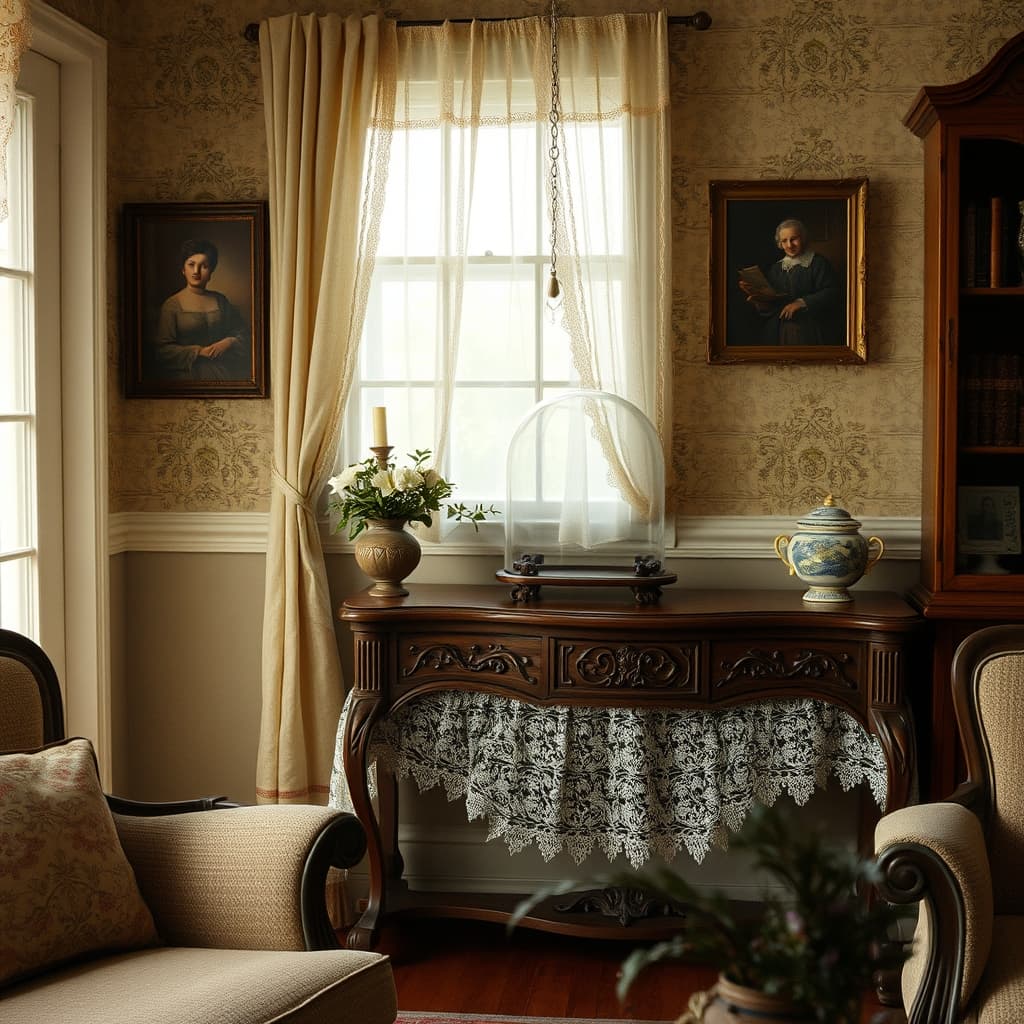
A glass cloche in a grandmother’s home could define a corner more strongly than the object beneath it. The dome caught window light, reflected movement, and created a small boundary within the room. A clock, artificial flowers, porcelain figure, bridal ornament, photograph, devotional item, or handmade arrangement might be protected inside. Family members learned whether touching was allowed and who lifted the glass for cleaning.
Cloche forms differ in glass quality, thickness, base, manufacturing marks, and original purpose. Some were designed for clocks, taxidermy, flowers, food, or decorative display; later households reassigned them. The object currently beneath a dome may not be the one it was bought to protect. Photographs and family testimony are needed before treating the pairing as original.
The Dome Created a Rule of Attention
Covered objects looked important because access was restricted. Children viewed them from several angles without touching. Guests could ask for the story, prompting a familiar account. The cloche separated display from ordinary shelf clutter and made dust, absence, and small changes visible. If the object moved, the corner looked wrong.
This ritual could preserve family information or freeze one version of it. The relative responsible for the display often controlled what was said and which objects deserved prominence. Other inherited items remained in drawers. An archive should ask why this item was selected, who disagreed, and whether the display changed after a death or move.
Cleaning Was Delicate Labor
Dust gathered around the base and on curved glass. Lifting required two hands, clear space, and attention to chips or hidden cracks. Gripping a fragile dome by a top finial or knocking the rim against a hard surface can cause failure. Household glass cleaner may affect painted decoration or the object inside. Materials should be separated and cleaned appropriately.
Broken domes are difficult to repair safely. Adhesive joins can fail and sharp edges remain hazardous. Replacement glass should be documented rather than presented as original. Heavy domes need stable, level bases away from traffic, vibration, direct heat, and children’s reach. Earthquake risk may require discreet restraints designed by conservation professionals.
The Corner Is Part of the Object
Photograph the cloche in the room before moving it. Record dimensions, base, contents, reflections, window relation, nearby furniture, cleaning routine, and known changes. A close catalogue image alone cannot show why the placement became a household landmark. Floor plans and family photographs can establish continuity.
The glass cloche shaped ritual by turning protection into a visible daily act. People walked around it, dusted it, warned children, and repeated a story through the transparent barrier. Its significance rests in that relationship among fragile material, selected memory, and fixed space. Preserving the dome without its corner would keep the glass but lose much of the home life it organised. Reflections in old photographs can be informative. Window shapes, curtains, people, and furniture mirrored in the dome may help reconstruct the room, although distorted reflections require caution. Photographing the cloche today from matching angles can reveal how the corner and household presentation changed.