
The Golden Age of Fax Machine Technology: How Analog Devices Changed Everyday Life
fax-machine-analog-technology-golden-age-history

🇬🇧 How Fax Machines Changed the Balance Between Speed and Waiting in Analogue Working Life

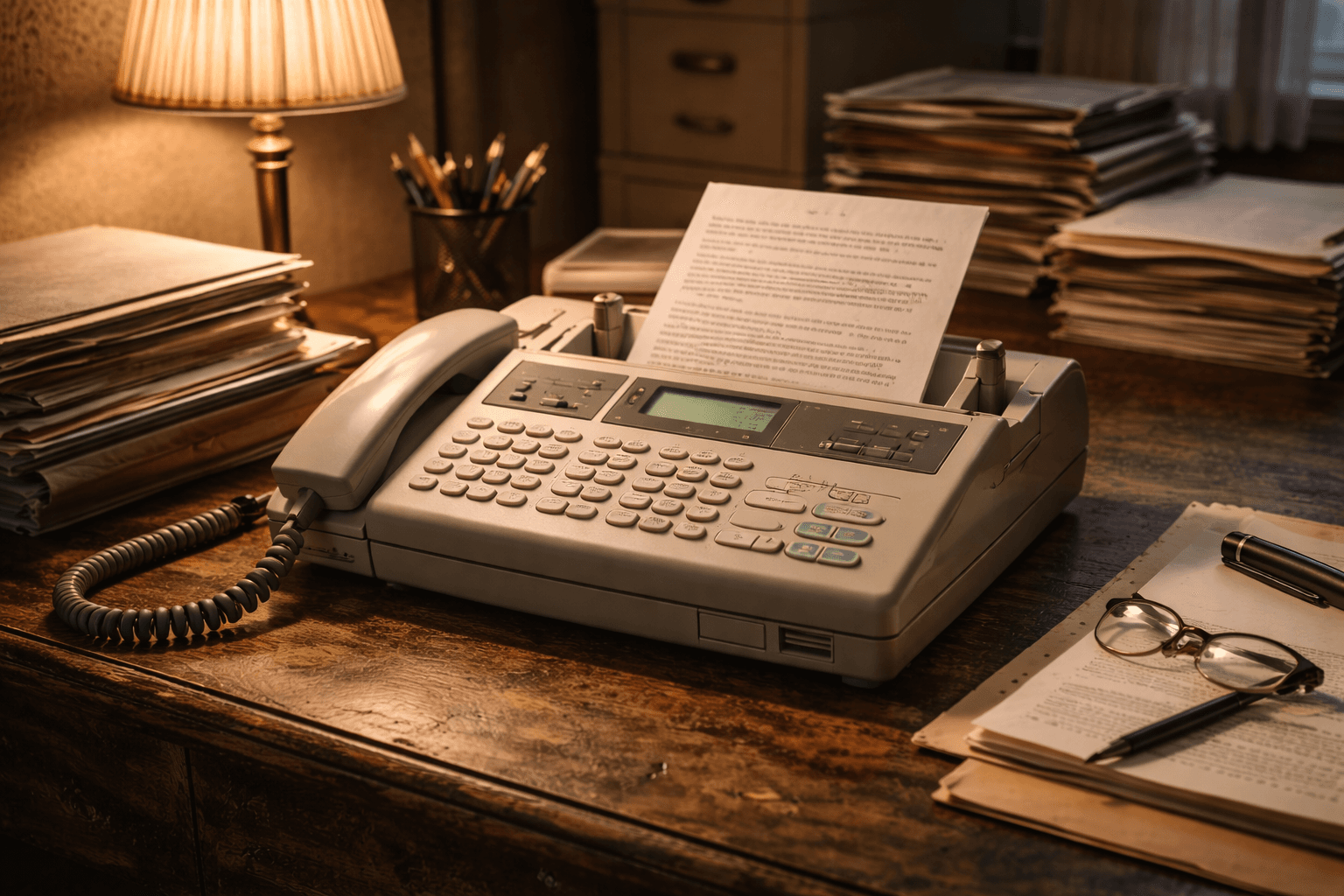
Ink Traveling Through Telephone Lines: The Quiet Revolution of Fax Machines In the corridors of offices during the 1980s and 1990s, a distinctive sound echoed through the air: a thin electronic hum followed by the sharp tone of a telephone connection and the slow movement of a sheet of paper emerging from a machine. The fax machine was at work. For many people, this sound symbolized more than a device operating—it represented the shrinking of distances and the acceleration of communication. Fax machines were among the most fascinating inventions of the analog technology era. Before emails and instant messaging became everyday tools, the idea that a document could travel hundreds or thousands of kilometers in just a few minutes seemed almost magical. Contracts, sketches, official forms, or purchase orders could be sent through telephone lines and appear moments later on a machine in another city or even another country.

The Journey of a Document: Elegance of Analog Engineering

The technology behind fax machines relied on an elegant engineering concept. A document was scanned line by line, and the black and white patterns were converted into electrical signals. These signals traveled through telephone lines to the receiving machine, which reconstructed the information and printed it on paper. Although this process may seem simple today, it was remarkably innovative at the time. For businesses, time was critical. A contract sent by traditional mail could take days to arrive, but with fax machines, the same document could be delivered within minutes. For this reason, fax machines quickly became essential tools in banks, law firms, newspapers, and government offices.

A New Rhythm in Office Life

Fax machines were not just communication tools—they were part of office culture. In many workplaces, the corner where the fax machine stood functioned like a small communication hub. Incoming faxes were anticipated with curiosity, and freshly printed pages were quickly collected. For office assistants and secretaries, checking the fax machine was often one of the first tasks of the morning. Documents received overnight could contain anything from the first step of a business agreement to an invitation sent from another city. Many of these messages were printed on thermal paper, which faded over time. Today, these fading documents often remain tucked inside old folders, silent reminders of urgent messages from another era.

A Cultural Legacy of Analog Communication

Fax machines were not limited to offices; they also found a place in everyday life. Small businesses used them to receive orders, journalists transmitted articles through them, and sometimes families even sent handwritten letters to relatives using fax machines. Although digital communication technologies have largely replaced them, fax machines remain an iconic symbol of the analog communication era. At the time, watching a piece of paper travel across telephone lines felt almost like witnessing a small technological miracle. Perhaps that is why encountering an old fax machine today evokes more than nostalgia for a device. It recalls a time when communication moved slower, yet carried a tangible sense of connection.