
🇹🇷 Türkçe | Oyalı Yazma Bohçasından Salon Vitrinine: Ev Eşyasının Duygusal Prestiji Neden Geri Dönüyor?
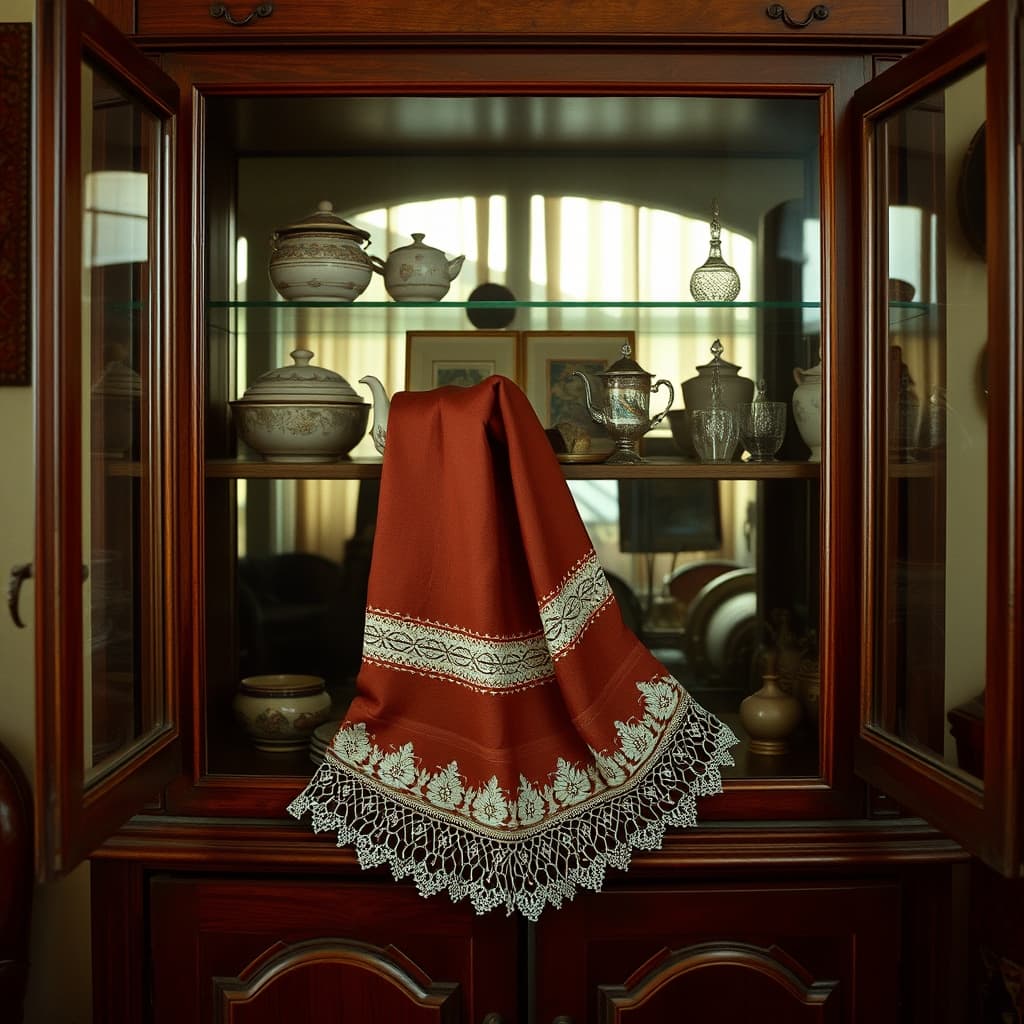
Bir dönem birçok evde misafir odasına girildiğinde göz ilk olarak salon vitrininin en görünür rafına takılırdı. Camın arkasında dantel kenarlı örtüler, özenle yerleştirilmiş fincan takımları, küçük kristal objeler ve çoğu zaman katlı duran bir oyalı yazma bohçası görülürdü. Bu dizilim rastgele değildi. Her parça, evin geçmişinden bir iz, ailedeki bir kadının emeği ya da özel bir günün hatırasıydı. Vitrin bir depolama alanından çok, evin kendi hikâyesini düzenli cümlelere dönüştüren sessiz bir sergi gibiydi.
Oyalı yazma bohçası bu serginin en duygusal parçalarından biriydi. Çeyiz hazırlığı döneminde sabırla işlenen oyalar, iğneyle geçirilen saatler ve renk seçimi üzerine yapılan uzun sohbetler, bu kumaşı sıradan bir eşya olmaktan çıkarırdı. Bohça sadece tekstil değildi; kuşaklar arası bilgi aktarımının taşınabilir biçimiydi. Hangi motifin hangi yörede kullanıldığı, hangi rengin hangi mevsimde tercih edildiği, kime hediye edileceği gibi ayrıntılar, kadın hafızasının gündelik ama güçlü arşivleriydi.
1970’lerden 1990’lara kadar kentli orta sınıf ev düzeninde salon vitrini, sosyal temsilin de bir parçası oldu. Misafir geldiğinde vitrin, ev halkının zevkini, düzen duygusunu ve emeğe verdiği önemi gösterirdi. Nesnelerin “en görünür köşe”ye yerleştirilmesi, gösterişten çok değer atfı ile ilgiliydi. Gündelik kullanımda yıpranmasın diye kaldırılan objeler, özel günlerde çıkarılarak işlev kazanırdı. Böylece eşya iki hayat yaşardı: cam arkasında temsil, masa üstünde ritüel.
Bu kültür zamanla modern minimalizm ve hızlı tüketim alışkanlıkları içinde geri çekildi. Tek tip depolama sistemleri, seri üretim dekorasyon ve sık eşya yenileme davranışı, nesnelerin kişisel hikâyesini görünmezleştirdi. Ancak son yıllarda insanların tekrar el işi tekstillere, ikinci el vitrin objelerine, eski çeyiz parçalarına yönelmesi tesadüf değil. Dijital çağın akışkanlığı içinde kalıcı, dokunulabilir, emeği hissedilebilir nesneler arıyoruz.
Oyalı bohçaya dönüş aynı zamanda yavaş üretim fikrine de dönüş. Bir kenar oyasını tamamlamak için geçirilen saat, bugün neredeyse lüks sayılan bir dikkat türünü temsil ediyor. Bu emek biçimi, hız ekonomisinin dışında kalan bir zaman anlayışı öneriyor: hemen tüketmek yerine saklamak, hızlıca değiştirmek yerine onarmak, tek kullanımlık trend yerine uzun ömürlü bağ kurmak.
Salon vitrininin yeniden popülerleşmesi de benzer bir ihtiyaçtan besleniyor. İnsanlar artık eşyayı yalnızca işleviyle değil, hikâyesiyle seçmek istiyor. Anneanneden kalan bir şekerlik, bit pazarından alınmış bir cam kâse ya da elde işlenmiş bir yazma, evde kimlik duygusu yaratıyor. Eşyaya yüklenen bu anlatı, mekânı anonim olmaktan çıkarıp kişisel bir belleğe dönüştürüyor.
Bu nedenle oyalı yazma bohçası ile vitrin rafı bugün yalnızca nostaljik dekor öğesi değil; kültürel süreklilik talebinin sembolü. Geçmişin nesneleri bugüne dönerken bize şunu hatırlatıyor: estetik ile emek, kullanım ile hatıra, görünürlük ile mahremiyet aynı nesnede buluşabilir.
Evlerin en görünür köşesinde duran bu küçük parçalar, aslında büyük bir soruya cevap veriyor: Hızlı çağda neyi saklamaya değer buluyoruz? Cevap çoğu zaman çok basit ama derin: eli değmiş, hikâyesi olan ve bizi bir aile cümlesine bağlayan şeyleri.
🇬🇧 English | From Embroidered Headscarf Bundles to Display Cabinets: Why Emotional Prestige in Household Objects Is Returning
In many homes of the past, entering the guest room meant your eyes immediately met the most visible shelf of the display cabinet. Behind glass sat lace-trimmed cloths, carefully arranged tea sets, small crystal pieces, and often a neatly folded embroidered headscarf bundle. This composition was never random. Each item carried a trace of family history, a woman’s labor, or a memory from a special day. The cabinet was less storage and more a quiet exhibition where the home narrated itself.
The embroidered scarf bundle was often the most emotional piece in that exhibition. During trousseau preparation, lace edging required long hours of needlework, color choices, and intergenerational conversation. The bundle was not just textile; it was portable cultural transmission. Motifs tied to regions, colors tied to seasons, and gifting customs tied to kinship turned fabric into archive. Domestic craft preserved knowledge that was rarely formalized, yet deeply structured.
From the 1970s through the 1990s, the living-room cabinet became part of middle-class urban representation. When guests arrived, the cabinet signaled taste, order, and respect for labor. Placing objects in the “most visible corner” was less about showing off and more about assigning value. Items protected behind glass were brought out on holidays and gatherings, giving objects two lives: symbolic display and ritual use.
Over time, this culture receded under minimal interiors and fast consumption. Standardized storage, mass-produced decor, and frequent replacement habits made personal object stories less visible. Yet the recent return of interest in handworked textiles, secondhand cabinet pieces, and inherited trousseau items is not accidental. In a fluid digital era, people seek tactile objects that hold labor and continuity.
The revival of embroidered bundles also reflects a return to slow making. The hours required to finish a lace edge represent a type of attention that now feels rare. This labor model suggests another relation to time: preserve instead of discard, repair instead of replace, build attachment instead of chasing disposable trends.
The renewed popularity of display cabinets grows from the same need. People increasingly choose objects not only by function but by narrative value. A sugar bowl from a grandmother, a glass dish from a flea market, a hand-finished scarf: these pieces create identity inside a room. Story-loaded objects transform anonymous interiors into personal memory landscapes.
For that reason, the embroidered bundle and cabinet shelf are no longer merely nostalgic decor. They symbolize a demand for cultural continuity. As older objects return to contemporary homes, they remind us that aesthetics and labor, use and memory, visibility and intimacy can coexist in one object.
These small items on the most visible shelf answer a large modern question: what is worth preserving in an accelerated age? Often the answer is simple and profound: what has human touch, layered story, and the power to connect us to family sentences that might otherwise fade.
🇧🇷 Português (Brasil) | Da Trouxa de Lenço Bordado à Vitrine da Sala: Por que o Prestígio Afetivo dos Objetos Está Voltando
Em muitas casas de outras décadas, entrar na sala de visitas era olhar direto para a prateleira mais visível da vitrine. Atrás do vidro ficavam toalhas rendadas, xícaras organizadas com cuidado, pequenos objetos de cristal e, muitas vezes, uma trouxa de lenço bordado dobrada com capricho. Nada ali era aleatório. Cada peça carregava memória de família, trabalho manual de alguém da casa ou lembrança de uma data especial. A vitrine funcionava como exposição silenciosa da história doméstica.
A trouxa de lenço bordado era uma das peças mais afetivas desse conjunto. No preparo do enxoval, os bordados exigiam horas de agulha, escolha de cores e conversa entre gerações. Não era só tecido; era transmissão de saber. Motivo, cor e forma de presentear tinham códigos culturais. Esse conhecimento, guardado no cotidiano feminino, raramente virava documento formal, mas estruturava identidade familiar.
Entre os anos 1970 e 1990, a vitrine da sala também virou linguagem social da casa urbana. Quando chegava visita, ela mostrava gosto, cuidado e respeito pelo trabalho manual. Colocar uma peça no “canto mais visível” não era simples vaidade; era atribuição de valor. Muitos objetos ficavam protegidos no dia a dia e ganhavam uso em datas especiais. Assim, viviam duas camadas: representação no vidro e ritual na mesa.
Com o tempo, minimalismo padronizado e consumo acelerado enfraqueceram essa prática. Móveis neutros, decoração de catálogo e troca constante de itens reduziram a presença das histórias individuais dos objetos. Ainda assim, o interesse atual por peças de enxoval antigo, vitrines vintage e têxteis artesanais mostra um movimento claro. No excesso digital, cresce o desejo por objetos com toque, memória e permanência.
A volta da trouxa bordada também indica retorno ao tempo lento de produção. Finalizar uma renda à mão representa atenção prolongada, algo raro na lógica da pressa. É uma ética diferente: guardar em vez de descartar, consertar em vez de substituir, criar vínculo em vez de seguir tendência passageira.
A vitrine reaparece pelo mesmo motivo. Hoje muita gente escolhe objeto pela história, não só pela função. Um açucareiro herdado, uma tigela comprada em feira de antiguidades, um lenço bordado à mão: tudo isso devolve identidade ao ambiente. O espaço deixa de ser genérico e passa a conter memória.
Por isso, trouxa de lenço e vitrine não são apenas decoração nostálgica. São sinais de busca por continuidade cultural. Quando esses objetos voltam para o centro da casa, lembram que estética e trabalho, uso e lembrança, exposição e intimidade podem coexistir.
Essas pequenas peças no canto mais visível respondem a uma pergunta atual: o que vale preservar na era da aceleração? Em geral, aquilo que tem marca humana, narrativa acumulada e força para nos ligar novamente à história da família.
