 Eski Pano
Some household memories are recalled not through a single object, but through several sounds heard at once. The firm strikes of a typewriter, the faint hiss of a radio, or the small tension that filled a room while the antenna on top of the television was being adjusted formed the common soundtrack of older technology days. As late afternoon light fell diagonally into the living room, a child might put aside a notebook, a father would turn the antenna slightly to the left, a mother would call out that the image had become clearer, and an older sibling or aunt seated at the typewriter in the corner would finish a formal petition or a private letter. In those years, hope often grew through turning a knob, pressing a key, or watching a blurred picture finally gather itself.
From the standpoint of technology heritage, the pairing of typewriter and antenna represents two different yet complementary habits of the same era. The typewriter carried a mechanical seriousness that organized thought, formalized speech, and turned part of the house into a miniature office. The antenna symbolized a more fragile, searching form of contact with the outside world. In one case, letters left marks on paper; in the other, an image slowly emerged from waves and interference. Both required patience. That patience was not merely a defect in the devices. It was part of the period’s general manner of approaching life. People did not receive results instantly, but learned to move at the same rhythm as the machines while approaching them.
What keeps this habit unforgettable is that it made hope tangible. Every sentence typed on the machine seemed to make an intention more serious. A job application, an official request, a letter to relatives in another city, or a school text gained weight through the metallic rhythm of the keys. The image clarifying as the antenna was turned created a similar anticipation. A beloved program would begin, the news might mention a familiar city, or the lines of a match on a black-and-white screen would become easier to distinguish. In those moments, the people in the room were waiting not only for a technical improvement, but for everyday life itself to come slightly more into focus.
Small domestic details deepen the scene. Eraser crumbs on the typewriter desk, carbon paper, the mild panic of realigning a crooked sheet, someone climbing on a chair to reach the antenna, the warning not to turn it too far, and the collective groan when the image suddenly disappeared all belonged to the same interior theater. The devices were not as smooth as those of today, but for that very reason they drew family members into the process. Technology was not an invisible system working silently in another room. It was a presence around which people gathered, something they corrected together and endured together with a certain patience.
Looking back from today, it is not difficult to understand why the habit was never forgotten. It contained not only the use of devices, but a discipline for living. The typewriter taught the weight of words, while the antenna taught the value of a visible image. Waiting, adjusting, trying again, and finally saying “now it works” created a satisfaction that was both technical and emotional. Inside that satisfaction there was not only skill, but companionship. In a household, the person who knew how to use the typewriter well or fix the antenna in exactly the right position earned quiet respect for a small but real expertise. Technology thus became a space where family roles were gently distributed as well.
In the end, what made typewriter days and the habit that grew with hope clarifying as the antenna turned unforgettable was the patient and touching relationship that era formed with technology. What remains in memory is not only the machine’s keys or the antenna’s metal rods. It is also the shared belief that a task would come together, an image would improve, a letter would reach its destination, or an evening of waiting inside the house would not be wasted. That may be why the devices of those years are still remembered not simply as tools, but as everyday companions that taught people how to hope.
Typewriter Days: Why Was a Habit That Grew with Hope Becoming Clearer as the Antenna Turned Never Forgotten?
🇹🇷 Daktilo Günleri: Anteni Çevirdikçe Netleşen Umut İle Büyüyen Bir Alışkanlık Neden Unutulmadı
🇵🇹 Dias de Máquina de Escrever: Por que um Hábito que Crescia Com a Esperança Ficando Mais Nítida a Cada Giro da Antena Nunca Foi Esquecido?
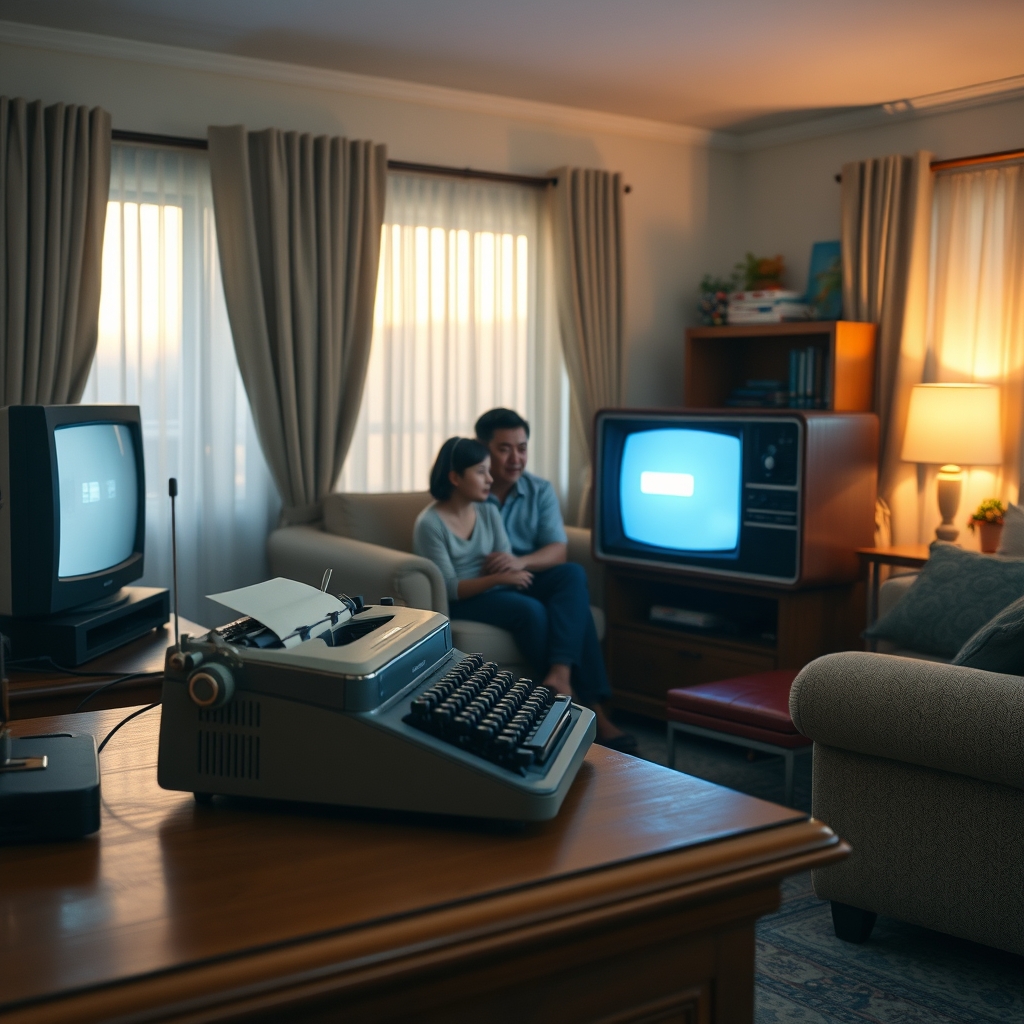
🇬🇧 The Old Domestic Technology Habit Built by Waiting as the Antenna Was Turned
🇹🇷 Anten Çevrilirken Büyüyen Bekleyişin Ev İçinde Kurduğu Eski Teknoloji Alışkanlığı
Bazı ev anıları tek bir eşya ile değil, birkaç sesin aynı anda duyulmasıyla hatırlanır. Daktilonun tok vuruşları, radyonun hafif cızırtısı ya da televizyonun üstündeki anten çevrilirken odada beliren kısa gerilim, eski teknoloji günlerinin ortak fonunu oluştururdu. Akşamüstü ışığı salona eğik düşerken bir çocuk defterini kenara bırakır, baba anteni az biraz sola çevirir, anne “şimdi netleşti” diye seslenir, bir köşede duran daktilonun başına oturan ağabey ya da teyze birkaç satır yazarak resmi bir dilekçeyi ya da özel bir mektubu tamamlamaya çalışırdı. Umut, o yıllarda çoğu kez bir düğmeyi çevirmekle, bir tuşa basmakla ya da görüntünün nihayet toparlandığını görmekle büyürdü.
Teknoloji Mirası açısından bakıldığında bu başlıkta bir araya gelen daktilo ve anten görüntüsü, aynı dönemin iki ayrı ama tamamlayıcı alışkanlığını temsil eder. Daktilo, düşünceyi düzene sokan, sözü resmileştiren ve evi küçük bir büroya dönüştüren mekanik ciddiyeti taşıyordu. Anten ise dış dünyayla temas kurmanın daha kırılgan, daha arayış dolu tarafını simgeliyordu. Birinde harfler kağıda iz bırakır, ötekinde görüntü dalgalanarak yavaş yavaş netleşirdi. Her ikisi de sabır isterdi. Bu sabır, cihazların kusurundan çok dönemin hayata yaklaşma biçimiydi. İnsanlar sonucu hemen alamaz, ama sonuca yaklaşırken cihazla birlikte aynı ritme girmeyi öğrenirdi.
Bu alışkanlığın unutulmamasının nedeni biraz da umut duygusunu elle tutulur kılmasıdır. Daktiloda yazılan her cümle, sanki niyetin daha ciddi bir hâle gelmesiydi. İş başvurusu, resmi dilekçe, şehir dışındaki akrabaya gidecek mektup ya da okul için hazırlanmış bir metin, tuşların metal sesiyle önem kazanırdı. Anten çevrilirken netleşen görüntü de benzer bir beklenti yaratırdı. Sevilen bir program başlayacak, haberlerde tanıdık bir şehir adı geçecek ya da siyah beyaz ekranda bir maçın çizgileri daha seçilir hâle gelecekti. O sırada odadaki herkes yalnız teknik bir düzelmeyi değil, gündelik hayatın biraz daha toparlanmasını beklerdi.
Gündelik yaşamın küçük ayrıntıları bu sahneyi derinleştirir. Daktilo masasının üstünde duran silgi kırıntıları, karbon kâğıdı, yamuk takılmış bir sayfayı yeniden hizalamaya çalışma telaşı, antene uzanmak için sandalyeye çıkan biri, “fazla çevirme” diye yapılan uyarılar, ekranda görüntü bir an kaybolunca yükselen toplu hayıflanma, hepsi aynı ev içi tiyatronun parçalarıydı. Cihazlar bugünkü kadar pürüzsüz değildi, ama tam da bu yüzden aile bireylerini işin içine katıyordu. Teknoloji ayrı bir odada, sessizce çalışan görünmez bir sistem değil; etrafında toplanılan, bazen birlikte düzeltilen ve birlikte sabredilen bir mevcudiyetti.
Bugünden geriye bakınca bu alışkanlığın neden unutulmadığını anlamak zor değildir. Çünkü orada yalnızca bir cihaz kullanımı değil, bir hayat terbiyesi vardı. Daktilo insana kelimelerin ağırlığını, anten ise görüntünün kıymetini öğretirdi. Beklemek, ayarlamak, yeniden denemek ve sonunda “şimdi oldu” demek, hem teknolojik hem duygusal bir tatmin yaratırdı. Bu tatminin içinde ustalık kadar ortaklık da bulunurdu. Evde birinin daktilo kullanabilmesi ya da anteni en doğru yerde sabitleyebilmesi, küçük bir maharet olarak saygı görürdü. Böylece teknoloji, yalnız bireysel beceri değil, aile içi rollerin de sessizce dağıldığı bir alan hâline gelirdi.
Sonuçta daktilo günleri, anteni çevirdikçe netleşen umut ile büyüyen bir alışkanlığın unutulmamasını sağlayan şey, o dönemin teknolojiyle kurduğu sabırlı ve dokunaklı ilişkidir. Hatırlanan yalnız daktilonun tuşları ya da antenin metal çubukları değildir. Bir işin toparlanacağına, bir görüntünün düzeleceğine, bir mektubun yerine ulaşacağına ya da ev içindeki bekleyişin boşa gitmeyeceğine dair duyulan ortak inanç da bu hafızanın içindedir. Belki de bu yüzden o yılların cihazları bugün hâlâ yalnız araç olarak değil, umut etmeyi öğreten gündelik eşlikçiler olarak anılır.
🇵🇹 O Antigo Hábito Tecnológico Doméstico Construído Pela Espera Enquanto a Antena Era Girada
Algumas lembranças de casa não voltam por causa de um único objeto, mas por vários sons ouvidos ao mesmo tempo. O toque firme da máquina de escrever, o chiado leve do rádio e a pequena tensão que tomava a sala quando alguém ajustava a antena da televisão formavam a trilha sonora dos antigos dias de tecnologia. Enquanto a luz do fim da tarde caía de lado sobre a sala, uma criança deixava o caderno de lado, o pai girava a antena um pouco para a esquerda, a mãe avisava que a imagem havia melhorado, e um irmão mais velho ou uma tia terminava na máquina um requerimento ou uma carta. Naqueles anos, a esperança crescia muitas vezes com o giro de uma haste, o toque de uma tecla ou o instante em que a imagem finalmente se definia.
Do ponto de vista do patrimônio tecnológico, a presença conjunta da máquina de escrever e da antena representa dois hábitos diferentes, mas complementares, do mesmo tempo. A máquina trazia uma seriedade mecânica que organizava o pensamento, tornava a fala mais formal e transformava um canto da casa num pequeno escritório. A antena simbolizava o contato mais frágil e mais buscado com o mundo exterior. Num caso, as letras deixavam marca no papel; no outro, a imagem surgia lentamente entre interferências. Ambos exigiam paciência. Essa paciência não era apenas um defeito do aparelho, mas parte da maneira como aquela época se relacionava com a vida. O resultado não vinha de imediato; aprendia-se a avançar junto com a máquina.
O que faz esse hábito permanecer na memória é o fato de tornar a esperança algo quase palpável. Cada frase datilografada parecia dar mais seriedade a uma intenção. Um pedido de emprego, um documento formal, uma carta para parentes de outra cidade ou um texto escolar ganhava peso com o som metálico das teclas. A imagem que ficava nítida à medida que a antena era ajustada criava uma expectativa parecida. Um programa querido ia começar, o telejornal talvez mencionasse uma cidade conhecida, ou as linhas de uma partida na tela em preto e branco ficariam mais visíveis. Nesse momento, quem estava na sala não esperava apenas uma melhora técnica, mas uma pequena reorganização da vida cotidiana.
Os pequenos detalhes domésticos aprofundam essa cena. Os farelos de borracha sobre a mesa da máquina, o papel-carbono, a aflição para alinhar uma folha torta, alguém subindo numa cadeira para alcançar a antena, o aviso para não girar demais e o desânimo coletivo quando a imagem sumia de novo faziam parte do mesmo teatro caseiro. Os aparelhos não eram tão suaves quanto os de hoje, mas justamente por isso puxavam a família para dentro do processo. A tecnologia não era um sistema invisível funcionando em silêncio noutro cômodo. Era uma presença em torno da qual as pessoas se reuniam, algo que se ajustava em conjunto e se suportava com paciência compartilhada.
Olhando de hoje para trás, não é difícil entender por que esse costume não foi esquecido. Havia ali não só o uso de aparelhos, mas uma pequena educação para a vida. A máquina ensinava o peso das palavras, e a antena ensinava o valor da imagem nítida. Esperar, ajustar, tentar de novo e finalmente dizer “agora foi” produzia uma satisfação ao mesmo tempo técnica e afetiva. Nessa satisfação havia habilidade, mas também convivência. Na casa, a pessoa que sabia usar bem a máquina ou encontrar o ponto exato da antena recebia um respeito discreto por essa competência. Assim, a tecnologia também se tornava um campo onde os papéis familiares se distribuíam de maneira silenciosa.
No fim, o que tornou inesquecíveis os dias da máquina de escrever e o hábito que crescia com a esperança se tornando nítida a cada giro da antena foi a relação paciente e tocante que aquele tempo construiu com a tecnologia. O que fica na memória não são apenas as teclas da máquina ou as hastes metálicas da antena. Permanece também a crença compartilhada de que um trabalho se acertaria, uma imagem melhoraria, uma carta chegaria ao destino ou uma noite de espera dentro de casa não seria em vão. Talvez por isso os aparelhos daquele período ainda sejam lembrados não só como ferramentas, mas como companheiros cotidianos que ensinavam a esperar com esperança.