Eski Pano
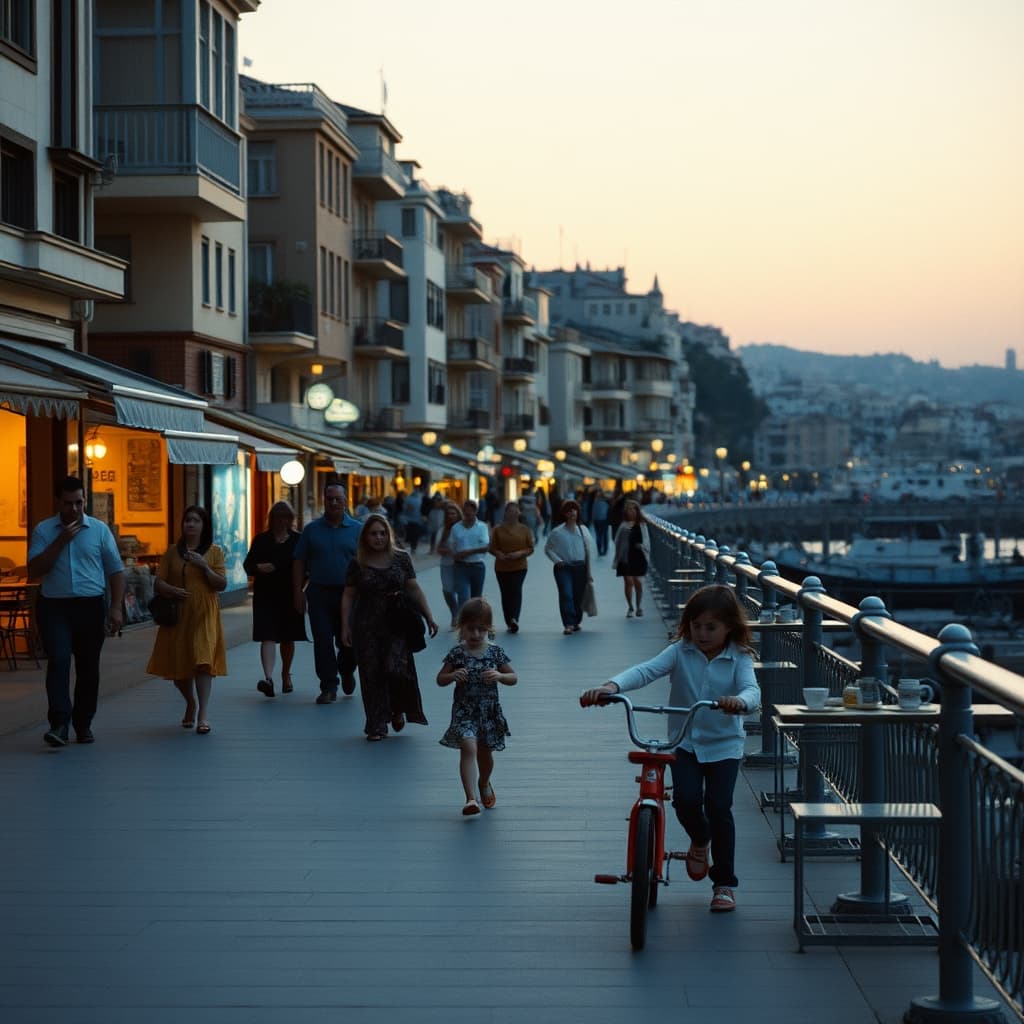
In old coastal towns, the hour when summer afternoons began to cool was the most anticipated threshold of the day. The sun still hovered above the water, yet pulled back its harshness; heat inside homes slowly loosened. Mothers gathered towels from balcony rails, fathers changed into lighter evening shirts, and children waited near the door as soon as they heard, “we’re going out soon.” That short preparation was not only for stepping outside, but for changing the mood of the day itself. The seaside walk was never just a stroll; it was a shared ritual through which generations breathed in the same tempo.
As the main street opened toward the shore, people’s steps aligned almost naturally. The smell of fresh bread from the bakery, vanilla from the ice-cream stand, and tea steam from the seaside cafe met in one evening breeze. Elderly women walked arm in arm, retirees folded newspapers on benches while facing the horizon, teenagers slowed their bicycles to greet friends. Nobody called it an “event.” It was the town’s daily way of checking its pulse. Lives that moved separately during the day reconnected along the waterfront in the cool of late afternoon.
One reason this ritual left such a deep mark in urban memory was the comfort of repetition. The same hour, the same route, the same small stops, yet each evening offered a minor variation. One day a new boat moored at the breakwater; the next day an old song played through municipal speakers; another evening someone noticed how much a neighbor’s child had grown. Memory keeps precisely these small differences within the same frame. That is why, years later, when someone says “we used to walk by the sea,” the phrase evokes not only a place but a disciplined sense of belonging.
Evening walks in coastal towns were also an invisible school of intergenerational manners. Elders taught children how to greet people, how to walk without blocking others, what to do when ice cream dropped on the pavement, and how to offer a bench spot to an older person. Local shopkeepers joined that lesson: the fishmonger said, “come early tomorrow,” the simit seller called, “send greetings to your family,” the pharmacist smiled from the window. In this way, the city entered memory not only through architecture but through social contact.
Cooling afternoons also strengthened seasonal awareness. In high summer, walks lasted longer; as September approached, winds rose and outings shifted earlier. Children felt that change on their skin before any calendar date announced it. For that generation, time moved not through digital alerts but through the tone of sea smell, the color of evening light, and how long people stayed on the quay. This body-based memory remains one of the most missed cultural inheritances in today’s accelerated cities.
Looking back now, the strength of those evening walks lies not only in romantic scenery but in a social capacity for togetherness. The coastal town used the cooling afternoon as a civic interface: bringing people onto the same route, softening daily tension, producing common rhythm. That is why those summers that warmed a generation from within were never forgotten. The deep trace in urban memory came as much from nightly neighborhood choreography as from the sea itself.
Summers When Evening Walks in Coastal Towns Became Ritual on Days That Warmed a Generation from Within: How Cooling Afternoons Carved a Deep Mark in Urban Memory