
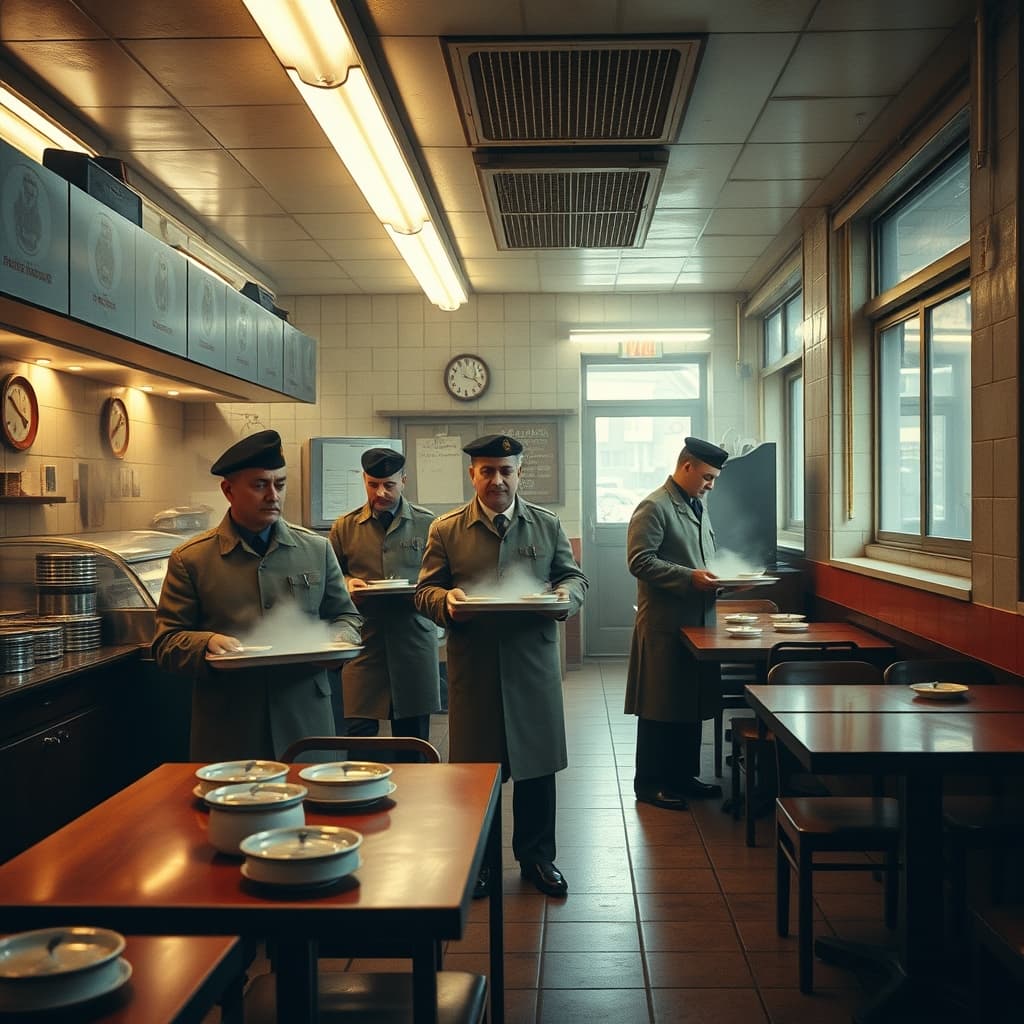
🇹🇷 Türkçe | Şehir Lokantasında Öğle Zili: Serinleyen İkindilerin Hafıza Dili
Öğleye doğru devlet dairelerinin koridorlarında aynı ses dolaşırdı: çekmeceler kapanır, kalemler masaya bırakılır, ceketler sandalyeden alınırdı. Evrak kokusunun içinden çıkan memurlar, adımlarını neredeyse ezbere bildikleri şehir lokantasına çevirirdi. Kapı aralığından mercimek çorbasının buğusu, taze ekmek kokusu ve metal tabakların birbirine değen sesi dışarı taşardı. O yarım saatlik masa başı buluşma, sadece karın doyurmak değil, şehrin öğle ritmine katılmak anlamına gelirdi.
Şehir lokantaları, bir dönemin ekonomik aklını ve toplumsal zarafetini aynı tabakta birleştirdi. Fiyatlar ulaşılabilirdi, porsiyonlar ölçülüydü, menü sade ama güven vericiydi. Kuru fasulye, pilav, cacık, mevsim salatası; her tabak bir ev mutfağının kamusal karşılığı gibiydi. Memur maaşıyla ay sonunu düşünerek yaşayan kuşaklar için bu lokantalar, yalnızca ucuz seçenek değil, düzenin sürdürülebilir yüzüydü. Aynı esnaf, aynı kasiyer, aynı ustabaşı, öğle saatinde insanlara değişmeyen bir çerçeve sunardı.
Bu çerçevenin tarihsel arka planında hızlı kentleşme ve büyüyen bürokrasi vardı. 1970’lerden 1990’lara uzanan dönemde pek çok şehirde kamu çalışanlarının gündelik temposu, civardaki lokantaların saatine göre şekillendi. Gazete köşelerinde “öğle izdihamı” haberleri görülür, yerel yazılarda uygun fiyatlı menülerin çalışan hayatını kolaylaştırdığı anlatılırdı. Şehir lokantası böylece ekonomik bir kurum olmanın ötesine geçip kent hafızasının tanıdık bir durağına dönüştü.
Gündelik ayrıntılar bu hafızayı bugün bile canlı tutar. Tepsisini alan bir memurun çatalı peçeteye sarıp cebine koyması, masadaki ekmek sepetinin ortada adilce dolaşması, duvardaki saat on iki kırkı gösterirken çayın demlenmeye başlaması… Her şeyin kendi sırası vardı. Yeni başlayan stajyerler büyüklerin oturduğu köşeyi zamanla öğrenir, emekliliği yaklaşanlar tatlıyı paylaşırken “bizim zamanımızda” cümlesini sessiz bir gururla kurardı.
Serinleyen ikindiye geçildiğinde şehir lokantasının etkisi bitmezdi. İnsanlar daireye döndüğünde masalarına sadece tok değil, konuşulmuş ve dinlenmiş olarak otururdu. Öğle arasında duyulan bir mahalle haberi, bir okul meselesi, bir kira konuşması akşam eve taşar, aile sofrasında ikinci kez anlatılırdı. Böylece lokanta masası, resmi çalışma gününün içine sızan yarı kamusal bir haber ağına dönüşürdü.
Bugün zincir restoranlar, hızlı teslimat uygulamaları ve bireysel öğün düzenleri hayatı pratikleştirse de o dönemin şehir lokantası deneyiminde başka bir yoğunluk vardı. Çünkü orada yemek kadar birlikte aynı saatte aynı yemeği yemek de değerliydi. Kaşığın tencerede bıraktığı ses, hesap fişinin köşesine düşülen not, “yarın da aynı saatte” denilen vedalar; bunların hepsi bir şehrin duygusal altyapısını kuran küçük tekrarlarıydı.
Serinleyen ikindilerin bize bıraktığı iz tam da burada beliriyor: şehir belleği yalnızca meydanlarda ya da manşetlerde değil, öğle paydosunun sıradan masalarında da yazılır. Şehir lokantaları memur öğlenlerine yön verirken, kuşaklara aynı anda hem tasarruf hem dayanışma hem de aidiyet öğretti. Bu yüzden o günleri hatırlayanların zihninde bir tabak fasulye, çoğu zaman bir dönemin toplumsal sıcaklığı kadar yer kaplar.
🇬🇧 English | Lunch Bell at the City Eatery: How Cooling Afternoons Became Urban Memory
Close to noon, the same sound moved through government office corridors: drawers shut, pens were set down, jackets lifted from chair backs. Leaving the smell of paperwork behind, civil servants walked toward the city eatery they knew almost by heart. From the half-open door came steam from lentil soup, fresh bread aroma, and the clink of metal trays. That short meal break meant more than eating; it meant stepping into the city’s shared midday rhythm.
City eateries combined economic practicality and social grace on one plate. Prices were reachable, portions balanced, menus simple but reassuring. Beans, rice, yogurt dip, seasonal salad: each plate felt like a public version of home cooking. For generations managing modest salaries through month’s end, these places were not only cheap options but stable anchors. The same shopkeepers, cashiers, and kitchen masters offered a familiar frame that rarely changed.
Behind this frame stood rapid urbanization and expanding bureaucracy. From the 1970s through the 1990s, in many cities the daily tempo of public workers was shaped by the eatery clock nearby. Local papers reported lunchtime crowding, and columns described how affordable menus eased working life. The city eatery moved beyond an economic service and became a recognizable station in urban memory.
Small details still keep that memory alive. A clerk wrapping cutlery in a napkin before sitting, a shared bread basket circulating fairly across the table, tea beginning to brew when the wall clock reached 12:40. Everything had an order. New interns slowly learned which corner senior staff preferred, and those near retirement shared dessert while saying “in our day” with quiet pride.
When the afternoon cooled, the eatery’s influence did not end. Returning to their desks, people sat down not only full but heard and connected. A neighborhood update, a school issue, a rent conversation picked up at lunch traveled home and was retold at dinner. In that sense, the eatery table became a semi-public news network running through the official workday.
Today, chain restaurants, delivery apps, and individualized meals make life more efficient, but the old city eatery carried a different density. There, value came not only from food quality but from eating the same meal at the same hour with others. The sound of ladles in pots, notes written on receipt corners, and farewells saying “same time tomorrow” were small repetitions that built a city’s emotional infrastructure.
This is the lasting mark of those cooling afternoons: urban memory is written not only in squares or headlines, but also at ordinary lunch tables. While city eateries guided civil-servant noon routines, they taught generations thrift, solidarity, and belonging at once. That is why, for those who remember, a simple plate of beans can still carry the warmth of an entire social era.
🇧🇷 Português (Brasil) | O Sinal do Almoço no Restaurante Popular: Como as Tardes Frescas Viraram Memória Urbana
Perto do meio-dia, o mesmo som corria pelos corredores das repartições: gavetas fechando, canetas sobre a mesa, paletós saindo do encosto da cadeira. Saindo do cheiro de papel e carimbo, os funcionários seguiam para o restaurante popular da cidade, caminho já decorado no corpo. Da porta entreaberta vinham o vapor da sopa de lentilha, o aroma de pão fresco e o choque metálico das bandejas. Aquele intervalo curto não era só refeição; era entrada no ritmo coletivo do almoço urbano.
Esses restaurantes juntavam, no mesmo prato, economia e elegância cotidiana. O preço cabia no bolso, a porção era medida, o cardápio simples transmitia confiança. Feijão, arroz, iogurte, salada de estação: cada prato parecia uma tradução pública da comida de casa. Para gerações que calculavam o fim do mês com salário apertado, o lugar não era apenas barato, era previsível. O mesmo caixa, o mesmo cozinheiro, o mesmo garçom davam ao meio-dia uma moldura estável.
No fundo dessa rotina estavam a urbanização acelerada e o crescimento da burocracia. Entre os anos 1970 e 1990, em muitas cidades, o passo diário dos servidores passou a seguir o relógio dos restaurantes próximos. Jornais locais falavam de filas no horário de pico, e colunas comentavam como os menus acessíveis sustentavam a vida de trabalho. Assim, o restaurante popular deixou de ser só serviço e virou ponto afetivo da memória da cidade.
Os detalhes comuns mantêm essa lembrança viva. O servidor que enrola o talher no guardanapo antes de sentar, a cesta de pão passando de mão em mão, o chá começando a ficar pronto quando o relógio marca 12h40. Havia uma ordem silenciosa. Estagiários aprendiam com o tempo qual mesa era dos mais antigos, e quem estava perto da aposentadoria dividia a sobremesa com um “no nosso tempo” dito sem pressa.
Quando a tarde esfriava, o efeito do almoço não acabava. Ao voltar para a repartição, as pessoas se sentavam não apenas alimentadas, mas escutadas. Uma notícia do bairro, um assunto da escola, uma conversa sobre aluguel passava do restaurante para a mesa de jantar em casa. A mesa do almoço funcionava, assim, como uma pequena rede de informação dentro do dia oficial.
Hoje, redes de fast food, aplicativos e refeições individuais tornaram tudo mais prático, mas aquela experiência tinha outra espessura. O valor estava também em comer juntos, na mesma hora, com o mesmo cardápio. O som da concha na panela, o recado no canto da comanda, o “amanhã no mesmo horário” na despedida: repetições pequenas que construíam a infraestrutura emocional da cidade.
É aí que mora a marca das tardes frescas: a memória urbana não se escreve só em praças e manchetes, mas também nas mesas comuns do intervalo. Ao orientar o almoço dos funcionários públicos, os restaurantes ensinaram, ao mesmo tempo, economia, convivência e pertencimento. Por isso, para quem viveu aquele tempo, um prato simples de feijão ainda guarda o calor social de uma época inteira.
