Eski Pano
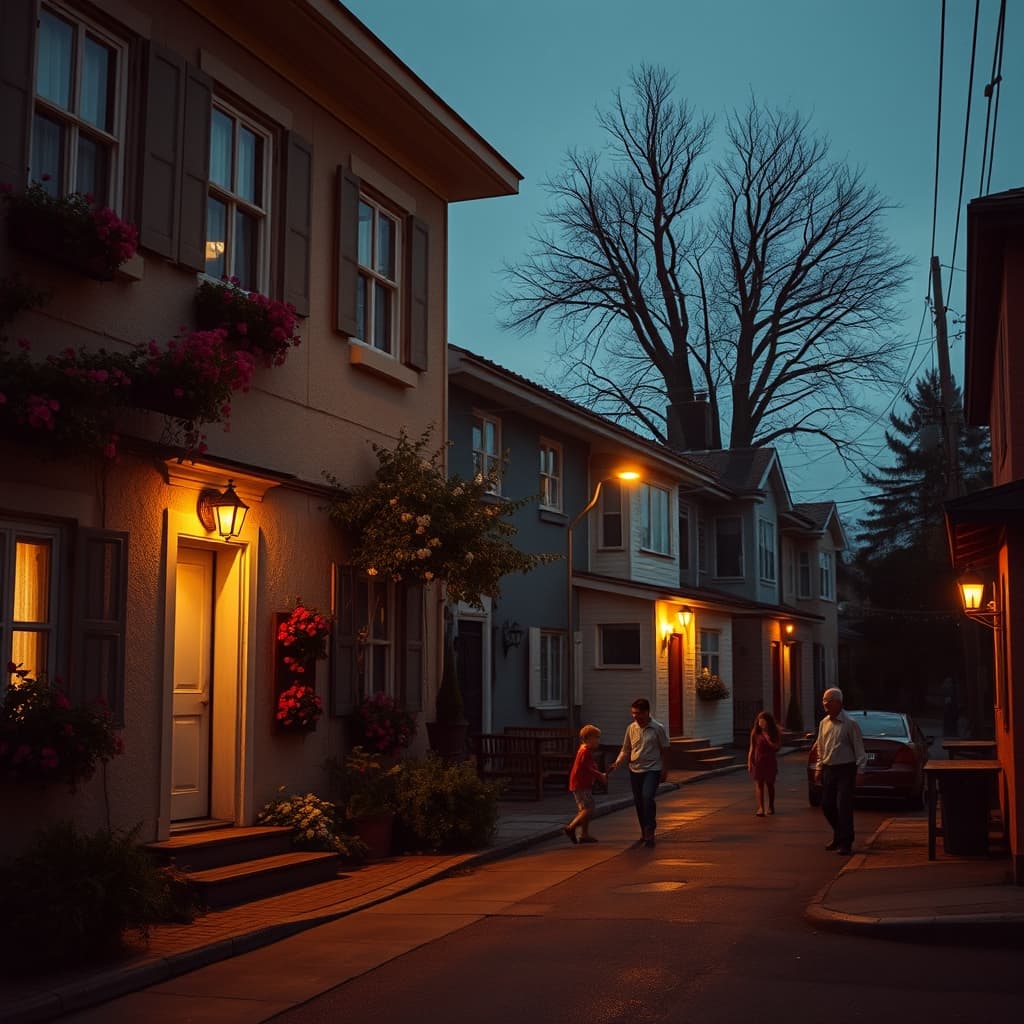
In the evenings when streetlights still glowed with a soft yellow modesty, the scent of flowers spread through the neighborhood like a thin covering over the day’s fatigue. Jasmine hanging from garden walls, geraniums lined along window ledges, and the cool smell of watered soil in summer built the invisible language of neighborly life. Children drew hopscotch squares beneath the lamps, mothers called from balconies, a plate leaving one house stopped at another, and almost every passing step met a familiar greeting. A neighborhood was not merely houses standing side by side. It was daily life flowing while constantly brushing against other lives.
Then the first apartment buildings entered that order slowly. At first they looked like convenience, regularity, and practical solutions for expanding families. Yet in a short time they also changed the form of the street’s social life. The semi-public life once spread before one- or two-story homes gathered itself at the apartment entrance. Doorbells replaced knocking and direct calling. Courtyards gave way to entry halls, and conversations held by garden walls shifted to brief meetings in stairwells. The transformation did not arrive with a loud rupture, but through habits quietly moving from one place to another.
Seen historically, this was never only an architectural matter. The neighborhood’s first apartment buildings became small laboratories showing how urbanization entered everyday life. Newspapers praised “modern comfort,” “city-suitable flats,” and “central heating,” but residents noticed other details. Windows now looked down on the street from greater heights. Fewer chairs were set outside the front door. The hours when everyone happened to be outdoors at once grew rarer. The rhythm of the neighborhood tightened and turned vertical almost without announcing itself.
Still, it would be incomplete to describe the first apartment era as wholly cold. For a long time, the old order of neighborliness was carried into apartment life by force of habit. The woman downstairs borrowing a pot lid, bread being lowered in a basket from the upper balcony, children’s shoes gathering on a landing, all showed that the building had not yet separated itself from the neighborhood. The porter’s room, the row of mailboxes, the distinct food aromas from each floor, and children knocking on doors during holiday mornings preserved traces of the earlier warmth. The apartment building did not erase neighborliness at once. It compelled it into another arrangement.
That is why forgotten details matter. Flower-scented streets remind us that change cannot be read only through loss. People looked for ways to adapt old habits to new spaces. Homes without gardens lined their windows with pots. Evening cool once shared in courtyards moved to the pavement before the building. Children’s games narrowed but did not disappear; when there was no empty lot for football, jump rope and quiet guessing games fit into stair landings and doorfronts. This transitional era is valuable because it shows how city life was negotiated before it fully hardened.
The first apartment buildings also altered the sense of privacy. Earlier, life unfolded in fuller view. One easily noticed which household was making pickles, who had guests, or which song drifted from which radio in the evening. With apartment living, doors closed, sounds withdrew behind walls, yet they did not vanish. Footsteps echoing through the stairwell, a market bag brushing the iron railing, a milk bottle left outside a door, or dinner scents escaping when a flat opened all became new signs of living together. Neighborhood culture was not erased. It changed its signals.
Looking back now, flower-scented streets appear melancholy partly because the beauty of that in-between period was fragile. People welcomed the comfort of modern life while not fully knowing how to name what they were leaving behind. That is why memory keeps not apartment numbers, iron entry doors, or freshly plastered facades, but geraniums, children under the lamps, and dishes carried from home to home. Memory chooses the warmth people tried to preserve within change more than the hard face of change itself.
In the end, the period when the neighborhood’s first apartment buildings altered the old order of neighborliness tells us that urbanization was never only a matter of concrete and planning. Flower-scented streets say that even when spaces changed, people kept trying to produce closeness, that a greeting could change form without disappearing, and that cultural inheritance often survives in these small acts of adaptation. If memories raised beneath streetlights still keep their glow, it is because the old neighborhood was not only lost. It was rebuilt across different floors and different thresholds.
In Memories Raised Beneath Streetlights, the Era When the Neighborhood’s First Apartment Buildings Changed the Old Order of Neighborliness: What Do Flower-Scented Streets Tell Us Through Their Forgotten Details?