 Eski Pano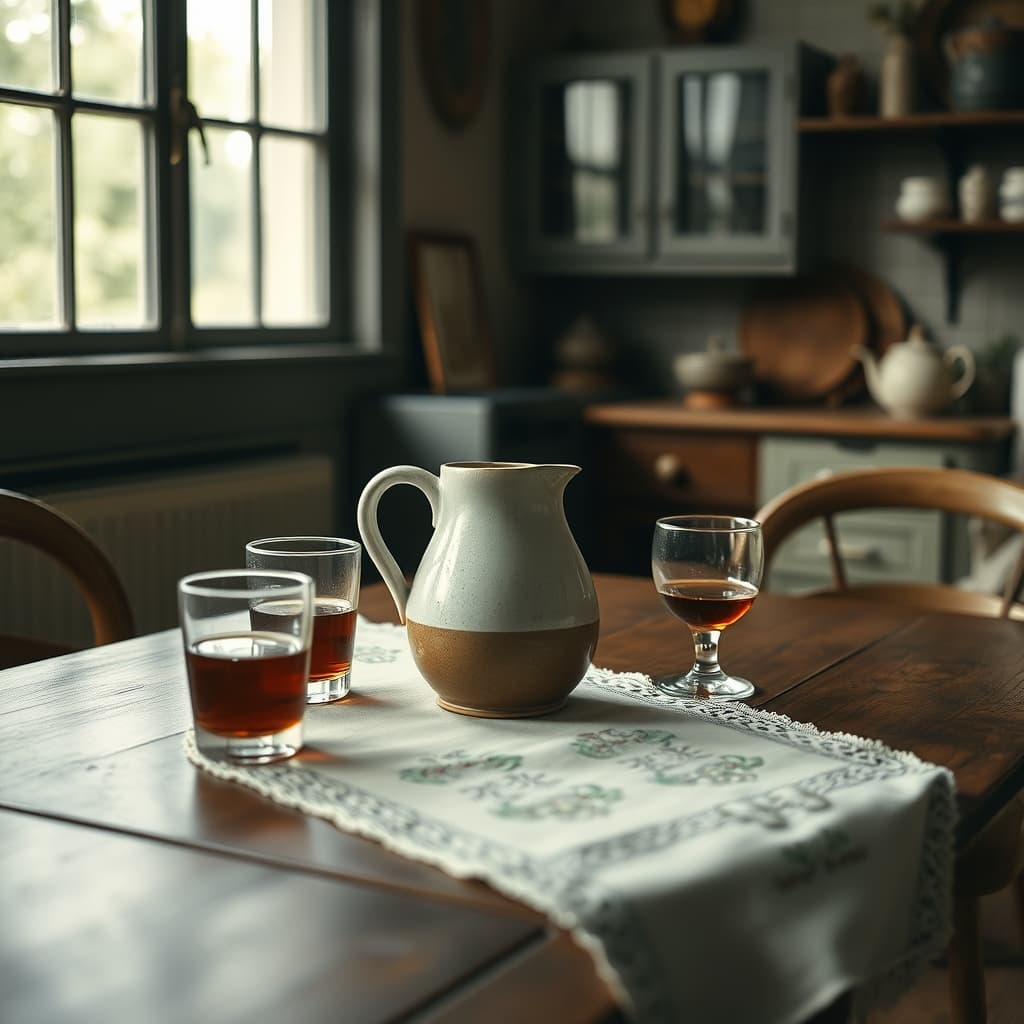
A ceramic pitcher could influence a table without becoming its centrepiece. Filled with water, ayran, or another household drink according to context, it moved between kitchen and dining space by its handle and returned to a familiar resting place. Its usefulness depended on relationships that were easy to overlook: weight when full, balance at the base, the distance between handle and body, and a lip that poured without sending liquid down the side.
Pitchers varied in clay body, firing, glaze, decoration, capacity, and origin. Some were locally made, some factory produced, and others acquired as parts of larger sets. Shape alone rarely establishes a precise date or workshop. Marks under the base, documented purchase history, manufacturing evidence, and comparison with reliable catalogues are more useful than assigning an object to an era simply because its colours appear old-fashioned.
The Handle Recorded Daily Judgement
A comfortable handle had to accommodate fingers while keeping the vessel under control. When the pitcher was full, wrist and shoulder carried its weight; when nearly empty, the angle of pouring changed. Fine cracks often appeared where the handle joined the body because that junction absorbed repeated stress. Worn glaze on the handle or base can document use, but it should be examined before anyone assumes the vessel remains safe for serving.
Chips, crazing, staining, and old repairs complicate continued use. Historic glazes may be unsuitable for food or drink, and damaged surfaces can be difficult to clean. A pitcher of uncertain material or condition is better treated as a display object until assessed by a qualified specialist. Decorative repair may preserve its story, but modern adhesive should not be assumed food-safe, reversible, or appropriate for valuable ceramics.
Its Place on the Table Expressed Taste Through Restraint
Decoration ranged from plain glaze to painted flowers, bands, geometric motifs, or moulded relief. Matching a table service could signal order and aspiration; a deliberately unmatched pitcher could reflect replacement, thrift, inheritance, or personal preference. Everyday taste was not created by designers alone. Households chose which object to keep visible, which to reserve for guests, and which to continue using despite a small imperfection.
Cleaning and storage shaped survival. Abrasive powders can scratch glaze, sudden temperature changes can cause cracking, and stacking heavy objects inside can strain rims. Dusting a display piece and supporting it from the base are safer than lifting by a weakened handle. Any label, box, photograph, or family note kept with the pitcher can add context that visual inspection cannot provide.
Ordinary Design Becomes Visible When Use Stops
While the pitcher remained in service, successful design often went unnoticed. Only after it moved to a cabinet did people inspect its silhouette, glaze runs, foot ring, and small asymmetries. Those features can reveal manufacturing choices, but admiration should not erase function. The object was shaped to be filled, carried, poured, washed, and returned. Its appearance developed around those actions.
For a Digital Nostalgia Archive, the ceramic pitcher matters because it makes everyday design legible. It reflects an era’s taste not as a single fashionable statement, but through compromises between beauty, price, durability, availability, and household habit. The quiet trace it left came from repetition: a hand finding the handle, a glass waiting beside a plate, and a familiar shape returning to the same table. Preserving that relationship gives the object more meaning than nostalgia for decoration alone.