 Eski Pano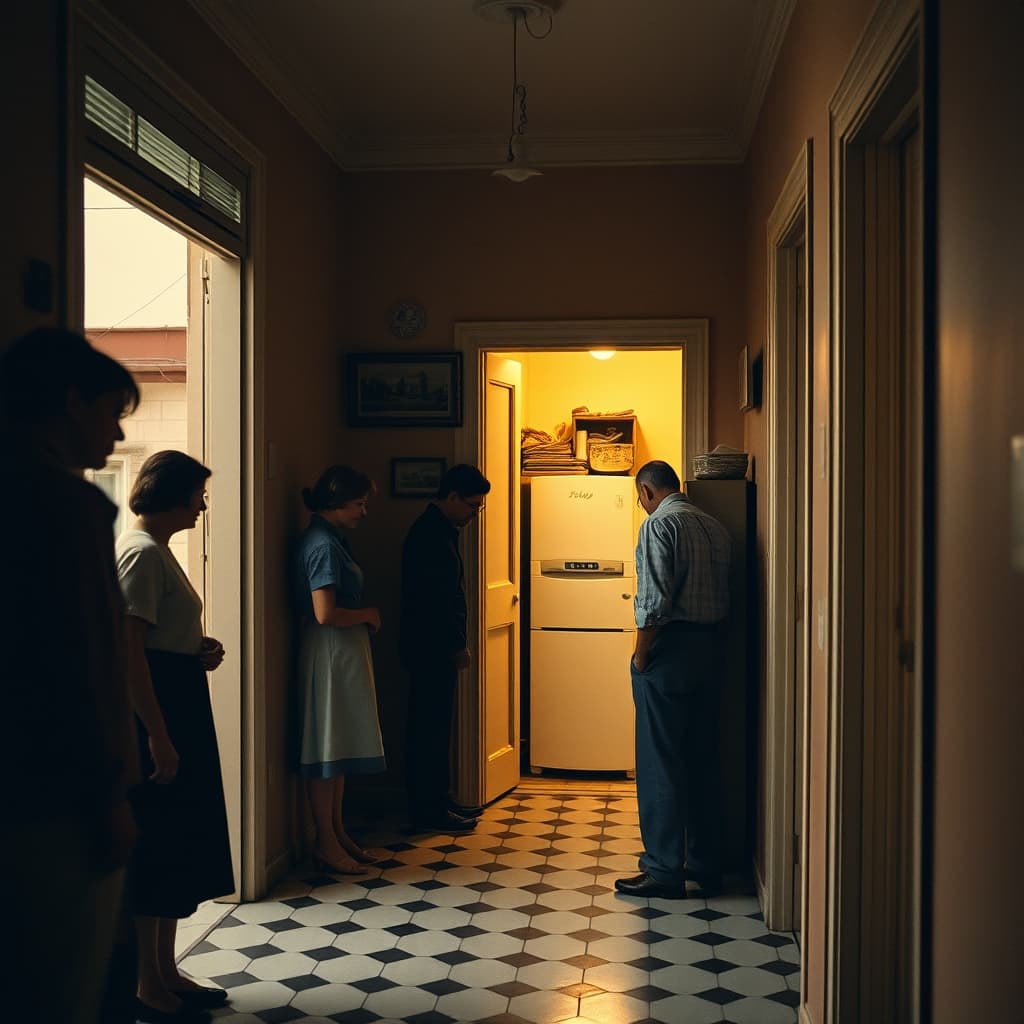
A refrigerator failure announced itself through small signs: a motor that no longer started, an unfamiliar rattle, water beneath the cabinet, or food that felt less cold than it should. The household response was immediate because the appliance protected both money and meals. Doors stayed shut to retain cold. Milk, meat, leftovers, and summer produce were assessed in order of risk. A neighbour might offer shelf space, while another supplied the telephone number of a repairer whose name had passed from landing to landing.
Older apartment buildings turned a private fault into a shared logistical problem. Someone had to remain home during a broad appointment window. The entrance door needed opening, stairs and narrow turns had to be described, and children were told to keep the corridor clear. If the refrigerator required movement, the floor and nearby furniture needed protection. The familiar phrase about waiting for the repairer therefore contained real coordination, not simply comic impatience.
Diagnosis Came Before the Tool Bag Opened
A responsible technician began by asking what had changed and when. Was the interior light working? Had the plug, socket, thermostat, door seal, airflow, or frost pattern altered? Different symptoms could point to electrical supply, controls, circulation, compressor components, or the sealed cooling system. Exact methods depended on model and period. Refrigerants and pressurised systems require trained handling; household improvisation could be dangerous and environmentally harmful.
Skilled diagnosis was sometimes difficult for customers to see. Listening, measuring, waiting for a cycle, or checking a seal could appear less dramatic than replacing a large part, yet these steps prevented needless cost. Repairers also worked within the limits of available spares. A compatible relay, gasket, thermostat, or shelf might have to be sourced from a shop across town, adapted with care, or ordered for a return visit. Their craft combined technical knowledge with a map of suppliers and models.
The Building Became a Temporary Support System
Neighbours exchanged practical help while the refrigerator stood uncertain. Perishable food moved into another flat, ice arrived in bowls, and lunch plans changed to use ingredients quickly. This cooperation was valuable, but it should not be romanticised as effortless. Shared storage required trust, space, hygiene, and the ability to ask. Some households lacked nearby relatives or friendly neighbours and faced the loss alone.
Food safety placed limits on nostalgia. Smell and appearance cannot reliably identify every hazard. Modern guidance on safe temperatures and discard times should take priority over inherited sayings, especially for meat, dairy, cooked rice, and vulnerable people. The old scene is worth remembering, but it is not a reason to repeat unsafe practices.
A Repair Visit Recorded the Life of an Appliance
When the motor resumed its steady sound, relief spread beyond the kitchen. A receipt, handwritten guarantee, replacement-part box, or service sticker often stayed in a drawer. These minor documents can now identify a model, local business, price, and repair date. Oral histories add how long the appointment took, who recommended the technician, and which foods were saved. Photographs should include the refrigerator in its actual room rather than isolating it as a design object.
The waiting apartment offers a precise fragment of urban memory. It shows how domestic technology depended on skilled labour, building access, spare-part networks, food knowledge, and neighbourly negotiation. The refrigerator was important not because it was glamorous, but because its silence disrupted the household timetable. By documenting the fault, the people who responded, and the practical compromises made before the cold returned, the archive preserves a working city rather than an idealised one.