Eski Pano
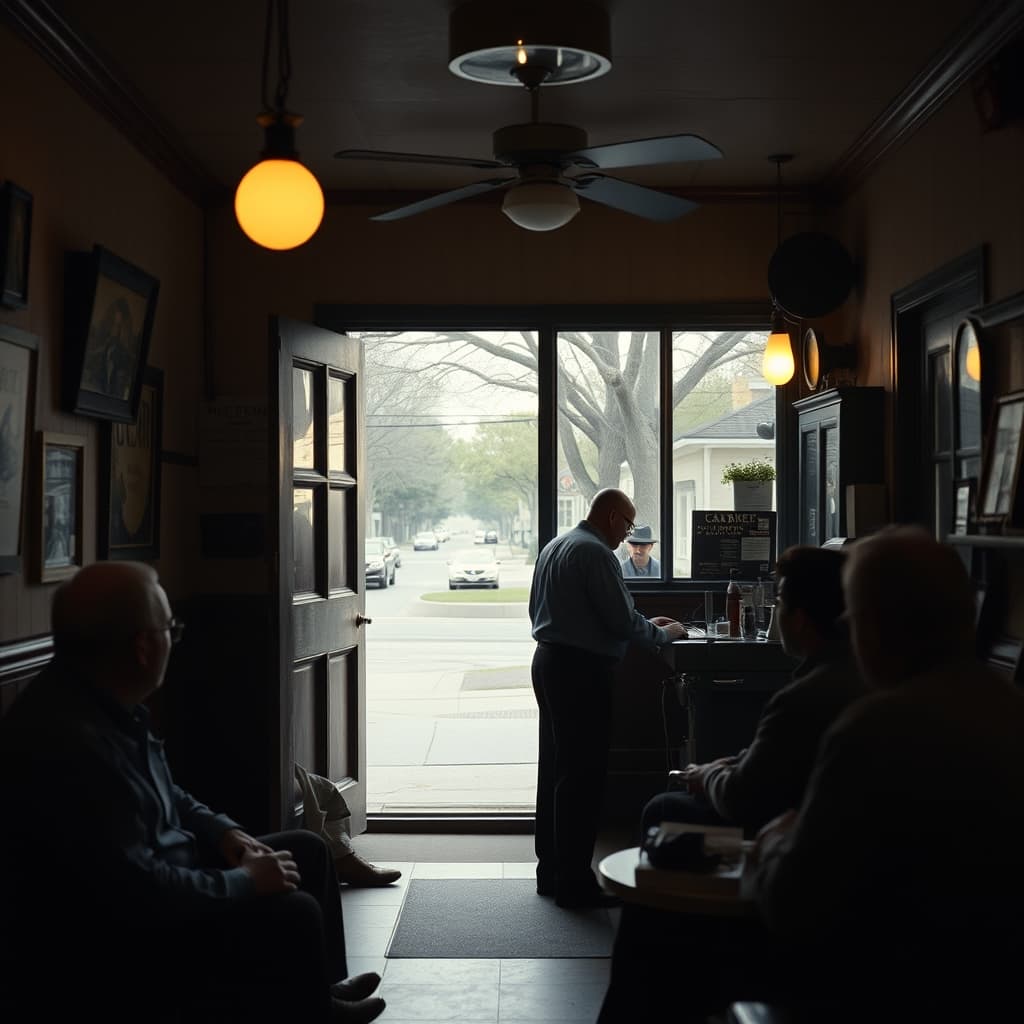
When afternoon sun leaned over the pavement, the neighborhood barber shop stopped being just a place for haircuts and became a compact news desk. Children pressed against the misty window, counting who was waiting for a trim, guessing the crowd from bicycles parked outside. Inside, the first sensation was soap foam and cologne; the second was the shared curiosity of a single question: what happened in the neighborhood today?
Calendar pages on the wall gained meaning through the conversations around the barber chair. Which street had an engagement this week, which building was expecting painters, whose name had finally been crossed off the grocer’s credit notebook. None of this was official announcement, yet it formed the practical rhythm of local life. People in front of the mirror looked not only at their own face, but also at the social flow passing behind them. The hum of clippers and a folk song from the radio supplied a steady pulse.
Linden-scented yards formed the outer ring of that pulse. As evening cooled, soft aroma from trees between apartment blocks drifted all the way to the barber door, wrapping the talk like seasonal background music. A man leaving the shop often continued the same conversation two minutes later beside a garden wall with another neighbor. Sentences begun in the shop moved into the street; those begun in the street returned to courtyards.
This arrangement was not merely nostalgic scenery. It was a micro-scale social coordination system inside the city. The barber shop worked as a trusted interface where people checked in on one another without invading privacy. If someone’s mother was ill, pharmacy shifts were discussed; if a son was leaving for military service, farewell plans were arranged there. There were no instant messaging platforms, but there was an unbroken spoken network.
What aches in memory today is not simply the barber chair itself, but the slow culture of attention formed around it. News now travels in seconds, yet it is harder to listen close enough to hear strain in a neighbor’s voice. In those shops, time offered to each other carried value equal to the service. The haircut ended, but the conversation lingered at the threshold for one more sentence.
Seen through the Zamanın İzinde lens, those recurring barber hours were fragile cultural heritage that never entered formal history but carried collective memory. The linden scent, metallic whisper of the razor, thin clink of tea glasses, and the moment a calendar page turned together held the pulse of an era. If that image still stings, the reason is not that the past was perfect; it is that shared time was lived more visibly.
For that reason the barber shop should be read not only as commerce, but as emotional civic infrastructure. Who seemed worried, who had not been seen for days, who brought a joyful update; such details were rarely archived in institutions yet stayed alive in spoken memory there. In linden evenings, those final doorway sentences proved that gentle social care could be practical, ordinary, and durable inside city life.
Barber Shops: How Was the Neighborhood Agenda Shaped with the Scent of Linden?