 Eski Pano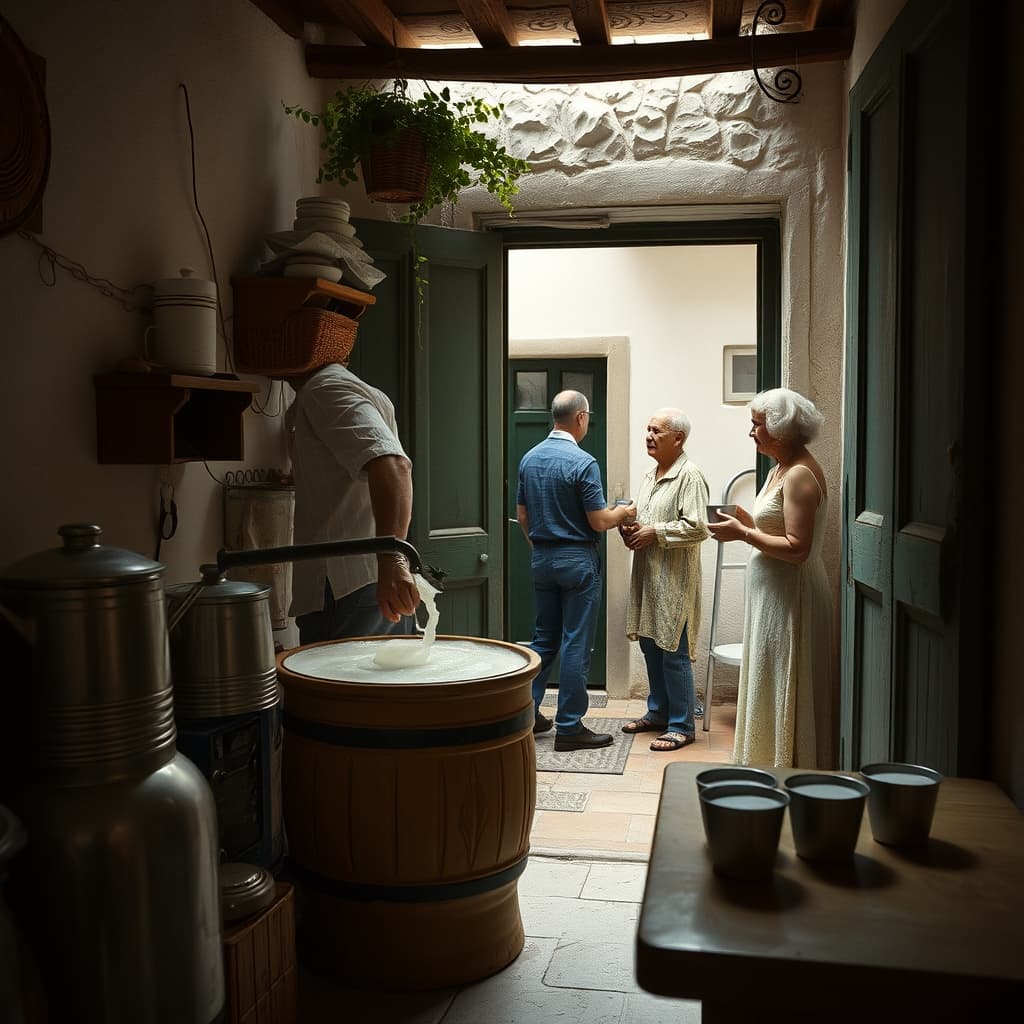
Churned ayran carried the memory of movement before it reached the cup. Cultured milk or yoghurt was combined and agitated in a vessel whose form varied by household and region. Repeated motion separated butter in some processes and left a thinner, tangy liquid that could be diluted, salted, cooled, and served. The drink therefore belonged to a wider dairy workflow, not merely to a modern recipe of yoghurt and water.
Terms and methods require local precision. Yayık may refer to skin, wood, pottery, metal, or mechanical churns, and the liquid remaining after butter-making can be described differently across communities. Some drinks called yayık ayranı today are produced by other methods. An archive should record what the maker calls the product, ingredients, vessel, and sequence instead of forcing every example into one definition.
Rhythm Was Physical Knowledge
Churning depended on temperature, fat content, acidity, vessel volume, motion, and time. The operator listened and felt changes in resistance. Several people might take turns because sustained movement was tiring. Children could help under supervision, learning rhythm without controlling hygiene or final judgement. Mechanical churns changed effort but introduced maintenance and cleaning needs.
The work around the vessel included milking or purchasing dairy, culturing, cooling, washing, skimming, collecting butter, preparing water, and cleaning every surface. Praising refreshment without naming this chain hides expertise. Water quality was especially important because dilution could introduce contamination after fermentation.
Sharing Followed the Batch
A large quantity suited harvest, courtyard work, travel preparation, guests, or a crowded meal. Cups, bowls, jugs, or ladles moved through the group. Salt and dilution reflected heat, labor, health needs, and preference. The drink refreshed, but it also distributed the result of dairy work across people who had contributed in different ways.
Sharing was not automatically equal. The maker and cleaner might drink last. Better cups could go to guests, and children received smaller portions. Milk ownership, animal care, and access to clean cold storage shaped who could produce a batch. These differences belong in the record.
Dairy Memory Needs Modern Safety
Raw milk and poorly controlled fermentation can carry serious pathogens. Current food-safety guidance, pasteurised ingredients where advised, clean water, sanitised equipment, appropriate temperatures, prompt cooling, and refrigeration should govern present practice. Sour taste alone does not prove safety. Allergies and lactose tolerance also matter.
An archive can record vessel dimensions, materials, motion, duration, ingredient source, butter yield, dilution, salt, serving, participants, and terminology. Video and sound can preserve rhythm; written notes preserve measurements and safety context. Churned ayran carried sharing culture because a batch connected animal care, fermentation, sustained labor, clean water, and a circle of cups. Remembering the whole chain keeps the drink refreshing without turning demanding dairy work into an effortless pastoral image. The churn itself can reveal repair history through patched skins, replacement staves, new ropes, worn handles, or altered lids. These changes identify the craftspeople who kept dairy work possible. Recording cleaning methods is equally important, because porous materials and complex joints made hygiene a demanding part of every batch.