 Eski Pano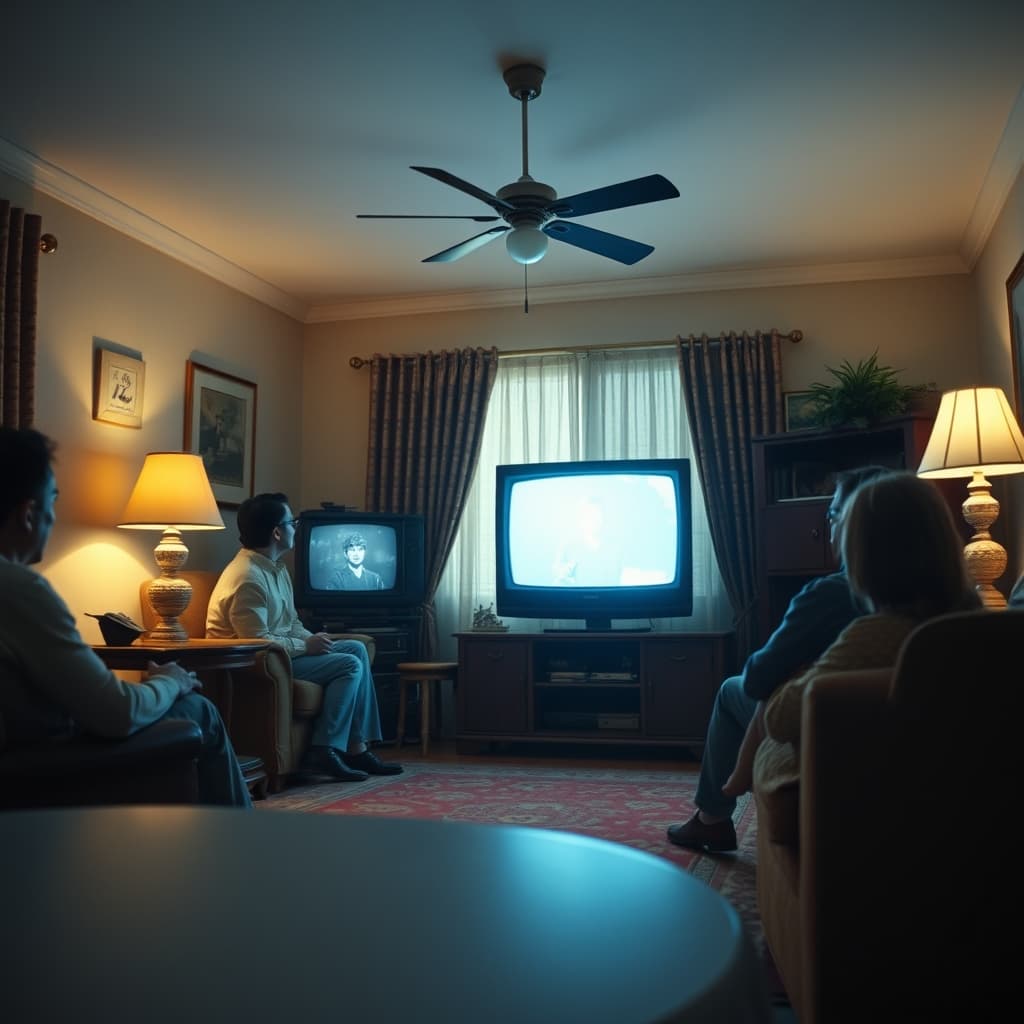
An analog television evening could begin with a picture that refused to settle. Lines crossed the screen, sound carried noise, or a face divided into a faint second outline. Someone stood beside the set or went toward the balcony, roof aerial control, or indoor antenna while another person watched the screen. Short instructions passed through the room: a little left, stop there, it was clearer before. Reception became a collective task completed just as the programme began.
The exact arrangement varied. Some households used a rooftop aerial shared by the building, others an individual outdoor antenna, an indoor loop, or extendable rods built into a portable set. VHF and UHF services, transmitter location, terrain, buildings, cabling, connectors, and receiver condition all affected the result. Turning an aerial was not a universal cure; poor contacts, damaged cable, electrical interference, or faults inside the television could produce similar symptoms.
The Picture Was Read as a Signal
Viewers learned to interpret distortion. Snow suggested weak or missing reception; ghosting could come from reflected signals; a rolling image might involve synchronization; sound without a stable picture pointed elsewhere. Their vocabulary was often informal, but repeated observation created practical knowledge. The person near the screen translated visual change into guidance for the person moving the antenna out of sight.
That work had risks. Rooftops, windows, ladders, wet surfaces, overhead electrical lines, and storms make aerial adjustment dangerous. No nostalgic ritual justifies unsafe access. Outdoor antenna systems should be installed and maintained by qualified people with proper grounding and lightning protection. A household memory can be preserved without recreating hazardous improvisation.
Scheduled Broadcasting Raised the Stakes
When a desired film, match, news bulletin, or entertainment programme had one broadcast time, losing reception felt urgent. The family could not pause while someone searched for the best angle. Once the picture improved, seating settled and conversation changed. Adults often controlled channel and volume, while children were asked to move away from the controls or hold a position that unexpectedly helped the signal.
Shared viewing was not automatically harmonious. Taste, authority, homework, bedtime, and the importance assigned to news produced negotiation. A family gathered in one room could still pay different kinds of attention. Some watched closely, others continued sewing or reading, and someone served tea. The television organised space, but domestic work did not stop.
Repair Culture Extended the System
Technicians checked more than the screen. Connectors, cable runs, tuners, power supplies, valves or transistors, solder joints, and aerial alignment could all matter depending on the set. They used measurement and substitution to separate reception trouble from receiver failure. Service notes, replaced components, and the name of a trusted repairer belong to the history of viewing as much as programme titles.
Preservation should document the receiver, aerial type, room position, building arrangement, channels received, and the people who performed adjustments. Unknown vintage televisions contain high voltages and components that may retain charge; they should not be opened casually. The remembered hope that sharpened as an antenna turned was grounded in real physics, learned cooperation, and limited broadcast choice. That combination made a fluctuating image feel like an event the household had achieved together.