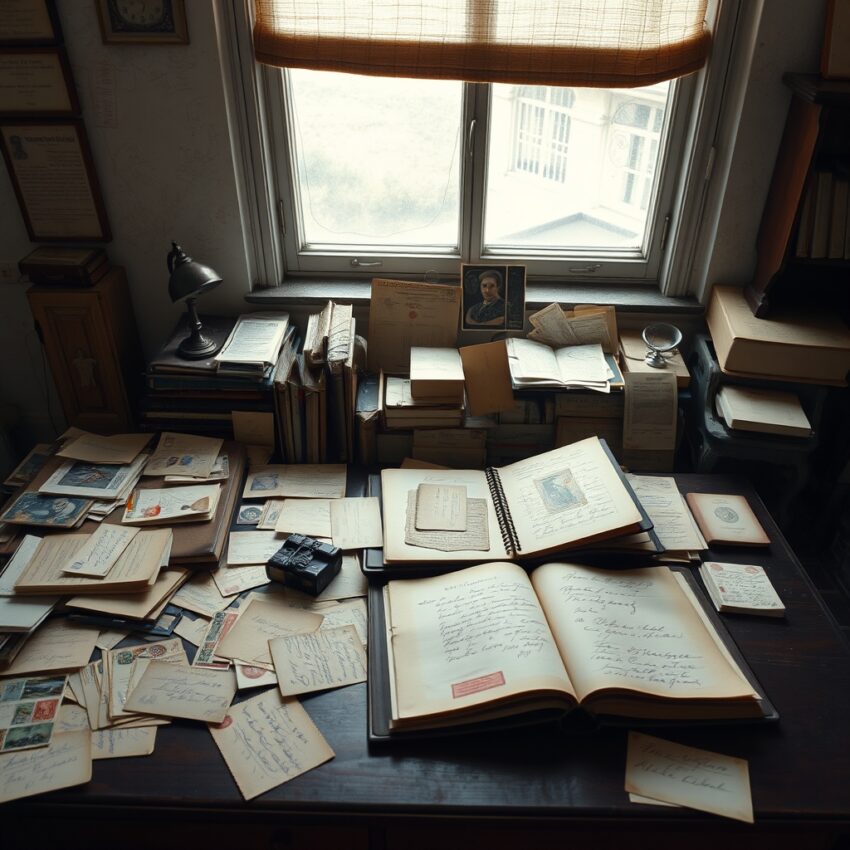
🇹🇷 Türkçe | Bir Kutunun İçinde Şehirler: Kartpostal Albümünün Sessiz Parıltısı
Eski bir kartpostal albümünü açmak, çoğu zaman bir çekmeceyi değil bir dönemi aralamaktır. Sayfalar arasında kalan ince kâğıt kokusu, mürekkebin solmuş tonu ve köşelere düşen tarih damgaları, geçmişin gündelik ritmini kelimelerden önce anlatır. Bir kartta kıyı kasabasının iskelesi, diğerinde henüz yıkılmamış bir sinema cephesi, bir başkasında kalabalık bir tren garı belirir. Koleksiyoner için bunlar yalnızca görüntü değil; kaybolan zamanın koordinatlarıdır.
Obje Hikayeleri perspektifinden kartpostal, tasarım ile tanıklığın nadir birleşimidir. Ön yüzündeki kompozisyon estetik bir tercih taşırken arka yüzündeki kısa not, dönemin duygusal haritasını verir. “Hava serinledi, dönüşte reçel getireceğim” gibi sıradan bir cümle bile, o dönemin ulaşım alışkanlıklarını, aile içi dili ve mevsimsel yaşam düzenini ele verir. Bu yüzden koleksiyonerler tek bir görsele değil, görsel ile metin arasındaki ince bağa da dikkatle bakar.
Kartpostal albümlerinin parlamasının bir diğer nedeni, şehir tarihini mikro ölçekte yakalamasıdır. Resmî arşivler çoğu zaman büyük olayları kaydeder; kartpostallar ise gündelik olanı saklar. Bir meydandaki tramvay hattının genişliği, vitrindeki yazı karakteri, insanların yürüyüş biçimi, kadınların şapka tercihleri gibi detaylar tarih araştırmacıları için kıymetli veriye dönüşür. Nostalji meraklıları bu ayrıntıları sezer; “eski şehir” denince duydukları heyecanın nedeni biraz da budur.
Koleksiyonerlik pratiği, sabır ve iz sürme becerisi gerektirir. Bit pazarlarında sararmış kutular karıştırılır, antikacılarda imzasız kartlar karşılaştırılır, çevrim içi müzayedelerde eksik bir seri için haftalarca beklenir. Albümde yan yana gelen iki kart bazen aynı sokağın on yıl arayla çekilmiş hâlini gösterir. Bu eşleşme anı, bir bulmacanın tamamlanmasına benzer bir sevinç üretir. Geçmiş birdenbire soyut bir fikir olmaktan çıkar, elinizde tutulabilir bir yüzeye dönüşür.
Kartpostalı güçlü kılan, aynı anda hem kişisel hem kamusal olmasıdır. Bir yandan gönderenin el yazısı, hitap biçimi ve duygu tonu vardır; öte yandan kartın görseli şehirlerin ortak belleğine aittir. Bu ikili yapı sayesinde bir obje, hem aile hikâyesinin parçası hem kent kültürünün belgesi olabilir. Nostalji meraklıları bu kesişimi fark ettikçe, albüm gözlerinde daha da parlak bir değer kazanır.
Bugün dijital fotoğraflar saniyeler içinde çoğalıyor; ama kartpostalın dokunsal niteliği hâlâ benzersiz. Kâğıdın kenarındaki yıpranma, pulun üstündeki damga, mürekkebin yer yer dağılması; tümü objenin yaşadığını gösterir. Bu izler, kusur değil otantikliktir. Kartpostal albümü bu yüzden yalnızca koleksiyon değil, zamanla kurulmuş bir temas biçimidir. Her sayfada geçmişe ait yeni bir ayrıntı parlar ve “bir şehrin hafızası nasıl korunur?” sorusuna sessiz bir yanıt verir.
Kültürel miras açısından bakınca kartpostal toplamak, bireysel meraktan öte kamusal bir katkıdır. Dağılmış aile arşivleri, kapanan işletmeler, dönüşen mahalleler bu küçük kâğıtlar sayesinde yeniden görünür olur. Koleksiyonerin titizliği, geleceğin araştırmacısına kaynak bırakır. Bu nedenle kartpostal albümleri nostalji tutkunlarının gözünde hemen parlıyor: çünkü onlar geçmişi romantikleştirmekten çok, geçmişin somut izlerini koruma sorumluluğu da taşıyor.
🇬🇧 English | Cities Inside a Box: The Quiet Brilliance of Postcard Albums
Opening an old postcard album often means opening not a drawer but an era. The thin smell of paper, faded ink, and date stamps in the corners narrate everyday history before words even begin. One card shows a seaside pier, another a cinema facade that no longer exists, another a crowded railway station. For a collector, these are not merely images; they are coordinates of vanished time.
From the perspective of object stories, the postcard is a rare fusion of design and testimony. Its front carries visual composition, while its back carries emotional mapping. Even an ordinary sentence like, “the weather cooled down, I’ll bring jam on return,” reveals transport habits, family language, and seasonal rhythms of life. That is why collectors read not only the image, but the subtle bond between image and text.
Postcard albums shine because they capture urban history at micro scale. Official archives often preserve major events; postcards preserve ordinary life. The width of tram tracks in a square, typography in a shop window, people’s walking posture, women’s hat choices, all become valuable historical data. Nostalgia enthusiasts sense these details instinctively; much of their excitement about “old city life” comes from this granular evidence.
Collecting itself demands patience and tracking skill. Yellowed boxes are searched in flea markets, unsigned cards compared in antique shops, missing series hunted for weeks in online auctions. Sometimes two cards placed side by side show the same street ten years apart. That matching moment creates the joy of completing a puzzle. The past stops being abstract and becomes a surface you can hold.
A postcard’s power comes from being both personal and public at once. On one hand, there is handwriting, tone, and intimate address. On the other hand, the visual belongs to shared urban memory. Thanks to this dual structure, one object can be part family story and part city document. As enthusiasts notice this intersection, the album gains even brighter value in their eyes.
Today digital photos multiply instantly, yet the tactile quality of postcards remains unmatched. Edge wear, postal marks, slight ink spread, these signs show the object has lived. They are not flaws but authenticity. A postcard album is therefore more than a collection; it is a method of contact with time. Each page offers another detail that quietly answers the question: how is a city’s memory preserved?
Seen as cultural heritage, postcard collecting is more than private curiosity; it is public contribution. Scattered family archives, closed businesses, and transformed neighborhoods become visible again through these small papers. The collector’s care leaves sources for future researchers. That is why postcard albums shine so quickly in nostalgia circles: they do not only romanticize the past, they protect its tangible traces.
🇧🇷 Português (Brasil) | Cidades Dentro de uma Caixa: O Brilho Silencioso dos Álbuns de Cartões-Postais
Abrir um álbum antigo de cartões-postais é, muitas vezes, abrir não uma gaveta, mas uma época inteira. O cheiro fino do papel, a tinta desbotada e os carimbos de data nos cantos contam o ritmo da vida antes mesmo das palavras. Em um cartão aparece um píer de cidade litorânea, em outro a fachada de um cinema já demolido, em outro uma estação cheia. Para o colecionador, isso não é só imagem; são coordenadas de um tempo desaparecido.
Pelo olhar das histórias de objetos, o cartão-postal é uma união rara entre design e testemunho. A frente guarda escolhas estéticas; o verso traz o mapa emocional de quem enviou. Uma frase simples como “esfriou por aqui, levo doce na volta” já revela hábitos de deslocamento, linguagem familiar e ritmo sazonal da época. Por isso, colecionadores leem não só a fotografia, mas a ligação delicada entre imagem e escrita.
Os álbuns brilham porque capturam a história urbana em escala microscópica. Arquivos oficiais registram grandes fatos; cartões preservam o cotidiano. A largura do trilho do bonde, a tipografia de uma vitrine, o jeito de caminhar das pessoas, os chapéus usados na rua: tudo vira dado histórico valioso. Quem gosta de nostalgia percebe esses sinais de imediato; boa parte do encanto vem justamente desses detalhes concretos.
Colecionar exige paciência e faro de investigação. Caixas amareladas são vasculhadas em feiras, cartões sem assinatura são comparados em antiquários, séries incompletas são procuradas por semanas em leilões online. Às vezes, duas peças lado a lado mostram a mesma rua com dez anos de diferença. Esse encontro produz a alegria de completar um quebra-cabeça. O passado deixa de ser abstrato e vira algo que cabe na mão.
A força do cartão-postal está em ser pessoal e público ao mesmo tempo. De um lado, há caligrafia, forma de tratamento e emoção íntima. De outro, a imagem pertence à memória coletiva da cidade. Essa dupla natureza permite que um único objeto seja parte de uma história familiar e também documento urbano. Quando o apaixonado por nostalgia percebe esse cruzamento, o álbum passa a brilhar ainda mais.
Hoje as fotos digitais se multiplicam em segundos, mas a materialidade do postal continua única. O desgaste na borda, o carimbo sobre o selo, a tinta levemente espalhada mostram que o objeto viveu. Esses sinais não são defeitos; são autenticidade. O álbum, então, é mais do que coleção: é um modo de tocar o tempo. Em cada página, surge uma resposta silenciosa à pergunta de como preservar a memória de uma cidade.
Do ponto de vista do patrimônio cultural, colecionar postais é mais do que hobby individual; é contribuição pública. Arquivos familiares dispersos, comércios fechados e bairros transformados voltam a aparecer por meio desses pequenos papéis. O cuidado do colecionador deixa fontes para quem pesquisará amanhã. É por isso que os álbuns brilham tão rápido aos olhos nostálgicos: eles não apenas idealizam o passado, eles guardam seus vestígios concretos.